
A mixed-status household is one where some family members are U.S. citizens or lawful residents and others are undocumented or hold a non-qualifying immigration status. This setup is incredibly common in the United States. According toMigration Policy Institute estimates, more than 10 million people live in such households, and a large share of them are children who are U.S. citizens by birth.
Many immigrant parents delay or completely avoid applying for SNAP because they fear that submitting an application will draw attention to their own status, count against them in immigration proceedings, or hurt a future green card application. Most of these fears are based on outdated or misunderstood rules. SNAP has built-in protections for citizen children, and current federal guidance is clear that receiving SNAP does not make a person a "public charge" in the way that term is often imagined. Our guide to SNAP and the public charge rule breaks down what the rule actually says and what it does not say.
Table of Contents
- 1Who Counts as a SNAP Household in a Mixed-Status Family
- 2Income Counting Rules for Mixed-Status Households
- 3Which Family Members Can Actually Receive SNAP Benefits
- 4How Applying on Behalf of Citizen Children Works in Practice
- 5What an Authorized Representative Can and Cannot Do
- 6Common Myths That Keep Mixed-Status Families from Applying
- 7How Benefits Are Calculated When Only Some Members Qualify
- 8Documents You Should Bring to the Interview
- 9State Variations That Affect Mixed-Status Families
- 10What to Do If Your Application Is Denied
- 11How SNAP Coordinates with Other Benefits for Citizen Children
- 12Practical Tips for the Application
- 13What SNAP Can and Cannot Buy
- 14Renewals and Reporting Changes
- 15A Path Forward for Mixed-Status Families
- 16Frequently Asked Questions
- 17Will applying for SNAP for my citizen children affect my immigration case?
- 18Do I need a Social Security number to apply for my children?
- 19Does my income count if I am undocumented?
- 20Can SNAP workers report me to immigration?
- 21Can my children get SNAP if I am undocumented and not working?
- 22What if only one parent is undocumented?
- 23Can I use my children's SNAP benefits to buy food for the whole family?
- 24Sources
Who Counts as a SNAP Household in a Mixed-Status Family
SNAP defines a household as the people you live with and share food with, not necessarily your legal family. That means a parent and child who eat together usually count as one SNAP household, even if the parent is undocumented and the child is a U.S. citizen. The citizen child is the applicant for benefits, while the undocumented parent can apply on the child's behalf as the household's authorized representative.
This distinction matters because it lets the child receive benefits without the parent having to disclose their own immigration status. The parent's income still counts toward the household budget, but the parent is not named as a beneficiary. The application may ask for the parent's name and income, but it cannot require the parent to provide an alien registration number, a green card, or any other proof of lawful presence to act as the child's representative.
Income Counting Rules for Mixed-Status Households
When an undocumented parent applies on behalf of citizen children, the parent's income is still counted toward the SNAP budget. This is sometimes called "pro-rating" or "attributing" income to the eligible members. The exact calculation method varies a bit by state, but the general rule is that all income earned by anyone in the household, regardless of immigration status, is included when figuring out how much the eligible members can receive.
The result is that a household with two working undocumented parents and three citizen children will be evaluated using the parents' combined income. If that income is low enough, the children qualify for benefits sized to a household of five, even though only the three children actually receive the SNAP allotment. The benefit amount is based on household size, not the number of eligible people in the household.
Which Family Members Can Actually Receive SNAP Benefits
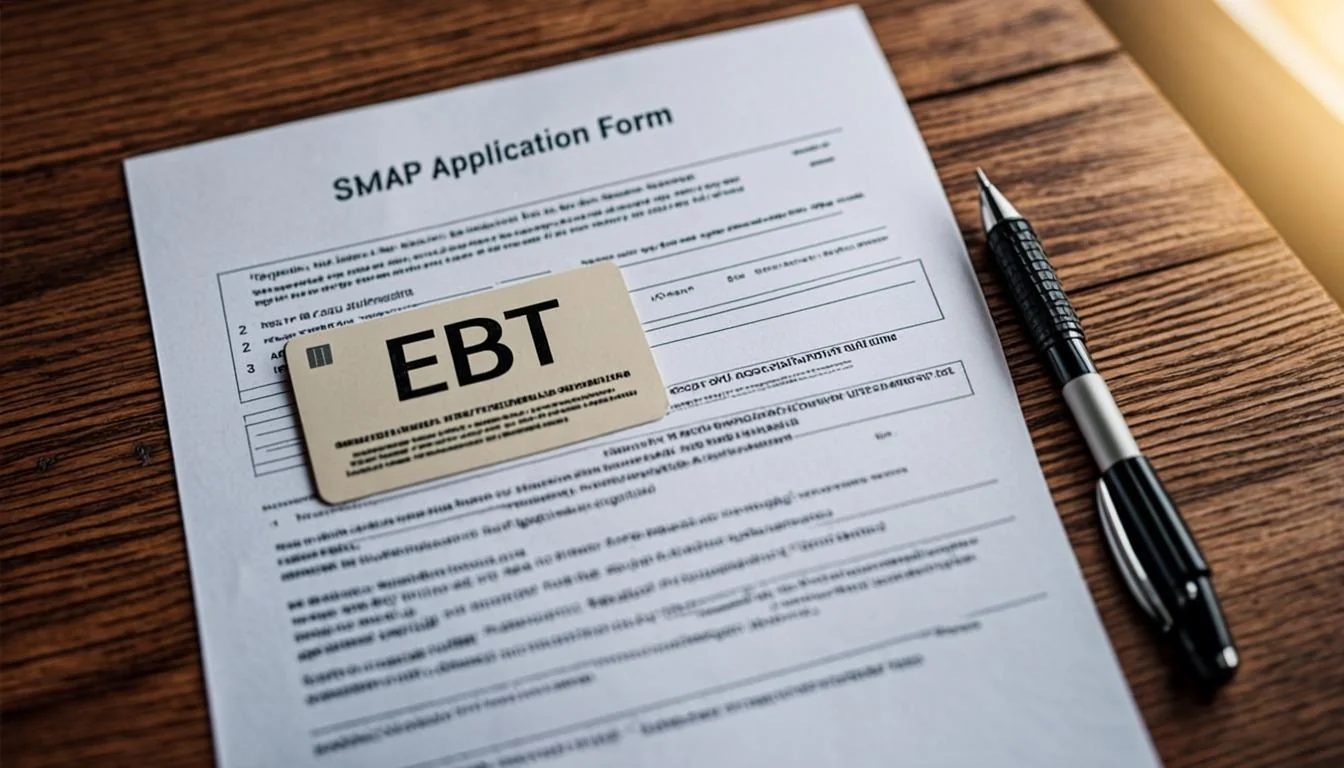
Only people who meet the citizenship or qualifying-immigration test can receive SNAP. This group includes U.S. citizens, nationals, refugees, asylees, Cuban and Haitian entrants, trafficking victims, certain battered spouses, lawful permanent residents who have lived in the U.S. for at least five years, and a handful of other categories. If you want a deeper look at which statuses qualify, our breakdown of immigrant eligibility for SNAP covers each category in detail.
Lawful permanent residents, often called green card holders, are subject to the five-year waiting period in most cases. That waiting period begins on the date the person received their green card, not on the date they entered the country. Some categories, including refugees and asylees, are exempt from the waiting period. Our SNAP guide for green card holders walks through the five-year rule, the exceptions, and how to count the days correctly.
Undocumented immigrants, people on tourist or student visas, and most people with temporary protected status that does not fall under a qualifying category cannot receive SNAP themselves. They can, however, apply for their eligible family members.
How Applying on Behalf of Citizen Children Works in Practice
The mechanics of applying on behalf of children are simpler than most parents expect. The parent fills out the standard state SNAP application. In the household composition section, the parent lists every person in the home, including themselves. In the citizenship section, the parent indicates that the child is a U.S. citizen. For themselves, the parent can check a box that says they are a non-applicant or that they are applying only on behalf of the eligible household members.
The caseworker may still ask for proof of identity, proof of the child's citizenship (usually a birth certificate), and proof of household income. The parent does not need to provide a Social Security number for themselves to act as the child's representative. The child will need a Social Security number, but the parent's absence of one is not an automatic disqualifier.

What an Authorized Representative Can and Cannot Do
An authorized representative is the formal name for a person who applies for SNAP on someone else's behalf. Parents routinely serve as authorized representatives for their young children, and other relatives, neighbors, or even trusted friends can fill this role for adults who cannot apply themselves.
As an authorized representative, you can sign the application, attend the interview, submit documents, and use the EBT card to buy food for the eligible household members. You cannot, however, claim benefits in your own name, and you cannot use the EBT card for your own food if you are not part of the eligible household. Misusing the card can result in disqualification and repayment demands, so it is important to keep purchases limited to food for the eligible children.
Common Myths That Keep Mixed-Status Families from Applying
The biggest myth is that applying for SNAP for citizen children will trigger immigration enforcement against the parents. The USDA has issued repeated guidance making clear that SNAP application information is not shared with immigration enforcement for civil purposes. The information can be shared in narrow criminal investigations, but routine SNAP applications are not referred to ICE or U.S. Citizenship and Immigration Services.
Another common myth is that receiving SNAP will hurt a future green card application because of the public charge rule. The 2022 public charge rule, which is the rule currently in effect, excludes SNAP from the benefits that count toward public charge. Receiving SNAP for your children will not be held against you in a future adjustment-of-status application. If you have specific concerns about your situation, talk to an immigration attorney, but the blanket fear that SNAP ruins green card chances is not supported by the current regulation.
A third myth is that the parent must have a Social Security number to apply. This is also false. The parent's lack of a Social Security number does not block the application, and the caseworker should not ask for one when the parent is applying only as a representative.
How Benefits Are Calculated When Only Some Members Qualify
The benefit calculation in a mixed-status household starts with the full household size, including non-applicant members. The household's total gross income is compared to the gross income limit for that household size, which is usually 200% of the federal poverty level under broad-based categorical eligibility. If the household passes the gross income test, the caseworker moves on to the net income calculation.
Net income is gross income minus allowed deductions. These include the standard deduction, a 20% earned income deduction, dependent care costs, child support paid out of the household, and the shelter deduction for housing and utility costs that exceed half of the household's net income after other deductions. If you want the full breakdown of what counts, our guide to how SNAP treats child support payments explains one of the more commonly missed deductions in mixed-status families where one parent pays support to a child outside the home.
Once net income is calculated, the SNAP benefit is the maximum monthly allotment for the household size minus 30% of the net income. The allotment is paid in full even if only some members of the household are eligible. That means a family of five with three citizen children might receive the full allotment for a five-person household, even though only the three children are technically recipients.
Documents You Should Bring to the Interview
The SNAP interview is usually a phone call in most states, but the documents are the same whether the interview is in person or by phone. Bring proof of identity for the authorized representative, such as a driver's license, state ID, consular ID, or passport from any country. Bring the child's birth certificate or other proof of citizenship. Bring proof of income for every working adult in the household, including pay stubs from the past 30 days, a letter from the employer, or self-employment records.
Bring proof of housing costs, such as a lease, mortgage statement, or a letter from the landlord. Bring proof of utility costs, including the average monthly amount for electricity, gas, water, trash, and phone. If anyone in the household pays child support, bring the court order and proof of payment. If anyone is elderly or disabled, bring proof of medical expenses over $35 per month, since those count as a deduction.
State Variations That Affect Mixed-Status Families
SNAP is federally funded but state-administered, which means the rules can differ in important ways. California, for example, has a state-funded program called California Food Assistance Program that was historically only for lawful residents but is being expanded in some counties to certain undocumented older adults. New York, Illinois, and a few other states have similar state-funded replacements for people who do not qualify for federal SNAP.
Some states have eliminated the asset test entirely under broad-based categorical eligibility, while others still enforce one. The interview may be waived in some states for households with earned income and in others for households where all adults are elderly or disabled. The fastest way to know what your state requires is to start an application, because the state-specific questions appear as you fill it out.
What to Do If Your Application Is Denied
Denials in mixed-status households often happen because of a paperwork issue rather than an actual eligibility problem. A common reason is that the caseworker thought the parent was applying for themselves and requested immigration documents. If that happens, you can request a fair hearing within 90 days of the denial notice. At the hearing, clarify that you are applying as an authorized representative for your citizen children, not for yourself.
Another common reason for denial is income miscalculation, especially in households where one parent is paid in cash or where income varies week to week. Bring pay stubs, bank statements, and a written statement from your employer explaining your actual earnings. The fair hearing is informal, and many decisions are reversed when the household provides clearer documentation.
How SNAP Coordinates with Other Benefits for Citizen Children
Children who qualify for SNAP often also qualify for Medicaid, the Children's Health Insurance Program, free or reduced-price school meals, and the Summer EBT program. Applying for SNAP can serve as a gateway to these other benefits, since many states use SNAP participation to auto-enroll children in school meal programs. Some states also use SNAP data to auto-enroll children in Medicaid if the household meets the income rules.
The coordination runs the other way too. Households that already receive Medicaid or TANF often meet SNAP's income test through categorical eligibility, which skips the gross income test and the asset test. If you are already enrolled in Medicaid for your children, mention this on the SNAP application because it can speed up approval. Households with children often qualify for higher SNAP benefits than they expect, which is one reason our overview of SNAP benefits for families with children is one of the most-read pages on this site.
Practical Tips for the Application
Apply online if your state offers an online portal, because the digital form will skip questions that do not apply to your household. List every person in the home, including non-applicants, because the household size affects the benefit amount. Be clear in the citizenship section that you are applying only for the eligible members, and write "non-applicant" next to your own name if the form does not give you that option.
Submit documents through the portal, by mail, by fax, or in person, whichever is easiest. Keep copies of everything you submit, because lost paperwork is one of the most common reasons applications get delayed. If you do not hear back within 30 days, call the caseworker. If the caseworker is unresponsive, ask to speak with a supervisor or file a complaint with the state SNAP office.
If your application is approved, your EBT card will arrive in the mail within a few days. The card will be in the name of the eligible child or the head of household, depending on the state. Set the PIN carefully, since the card works like a debit card and is not replaceable if lost without ID. Keep receipts, because the balance on the card can be checked online, by phone, or on the receipt from your last purchase.
What SNAP Can and Cannot Buy
SNAP benefits can be used to buy most food items at grocery stores, supermarkets, and many farmers markets. Eligible items include bread, cereal, fruits, vegetables, meat, fish, poultry, dairy products, snacks, and seeds or plants that will produce food. In some areas, SNAP can also be used to buy hot prepared meals at participating restaurants, particularly for elderly, disabled, or homeless households.
SNAP cannot be used for alcohol, tobacco, vitamins, medicines, hot food meant to be eaten in the store, household supplies, pet food, or non-food items. The rules are strict, and cashiers cannot override them at the register. If you try to buy an ineligible item with the EBT card, the transaction will be declined for that item.
Renewals and Reporting Changes
SNAP certification periods usually last 6 to 12 months for households with earned income, and up to 36 months for households where all adults are elderly or disabled. At renewal, the household must submit updated income and household composition information. Failing to renew on time is one of the most common reasons benefits stop, even when the household is still eligible.
Between renewals, the household must report certain changes within 10 days, including income changes of more than $100 per month, household composition changes, address changes, and changes in legally obligated child support. Reporting a change does not always mean a benefit adjustment, but failing to report can lead to an overpayment notice later. Overpayments can be repaid through reduced future benefits, so it is better to report promptly and avoid the headache.
A Path Forward for Mixed-Status Families
The SNAP program is built to reach citizen children regardless of their parents' status. The rules are designed to protect the children and to allow parents to apply on their behalf without exposing themselves to immigration consequences. The fears that keep families from applying are real, but they are not supported by the actual regulations in force today.
If you have citizen children and your household income is modest, applying for SNAP is one of the most concrete things you can do to stretch your food budget. The application takes about 30 minutes, the interview is usually a phone call, and benefits can begin within 7 days for expedited households. The relief is real, and the protections are stronger than the rumors suggest.
Frequently Asked Questions
Will applying for SNAP for my citizen children affect my immigration case?
No. The current public charge rule excludes SNAP from the benefits that count against you. Applying on behalf of your children will not be held against you in a future green card application or any other immigration proceeding.
Do I need a Social Security number to apply for my children?
No. You can apply as an authorized representative without providing your own Social Security number. Your children will need Social Security numbers, but you do not.
Does my income count if I am undocumented?
Yes. All income earned by household members is counted toward the SNAP budget, regardless of immigration status. The benefit is calculated based on household size and total household income, even if only some members actually receive the benefits.
Can SNAP workers report me to immigration?
No. SNAP application information is not shared with immigration enforcement for civil purposes. Federal guidance prohibits SNAP agencies from disclosing application information to immigration authorities except in narrow criminal investigations.
Can my children get SNAP if I am undocumented and not working?
Yes, if your household meets the income test. Zero-income households often qualify for the maximum SNAP benefit for their household size. You will still need to verify identity, household composition, and the children's citizenship.
What if only one parent is undocumented?
The undocumented parent can still apply on behalf of the children as an authorized representative. The lawful parent can apply for themselves if they meet the eligibility requirements, including any applicable five-year waiting period for lawful permanent residents.
Can I use my children's SNAP benefits to buy food for the whole family?
Yes. SNAP benefits are intended to feed the household, not just the eligible members. The food you buy with the EBT card can be shared with everyone in the home, including non-applicant adults.
Check if your household qualifies in 2 minutes
Use our free SNAP eligibility calculator. No personal information required, no immigration questions, results in plain English.
Check My EligibilitySources

Wasim Akram
Founder & Lead Researcher · Food Stamp Eligibility Calculator
Wasim Akram is the founder and lead SNAP benefits researcher at FoodStampEligibilityCalculator.com. Every income limit, deduction, and benefit figure on this page is reviewed against the official USDA Food and Nutrition Service Handbook for the 2026 fiscal year. He also publishes broader U.S. public benefits content at Digitalwasim.com.