
Florida Food Stamp Eligibility Calculator 2026
Check if you qualify for SNAP benefits in Florida using our free eligibility calculator. Based on FY2026 BBCE income limits ($2,610 individual / $5,360 family of four). Get instant estimates for your monthly EBT allotment.
Florida SNAP Eligibility Calculator
Enter your family details to check your florida food stamp eligibility and estimate your monthly SNAP benefit.
Include yourself and everyone who lives with you and shares meals
Total income before taxes and deductions for all family members
Childcare, adult daycare, or other dependent care expenses
Legally obligated child support you pay to someone outside your family
Out-of-pocket medical costs for family members who are 60+ or disabled (amounts over $35 are deductible)
Monthly rent or mortgage payment for your primary residence
Electricity, gas, water, phone, and other utility expenses
Include bank accounts, cash, and other countable resources. Your home and vehicle are typically excluded.
How Food Stamps Work Across Florida's 67 Counties
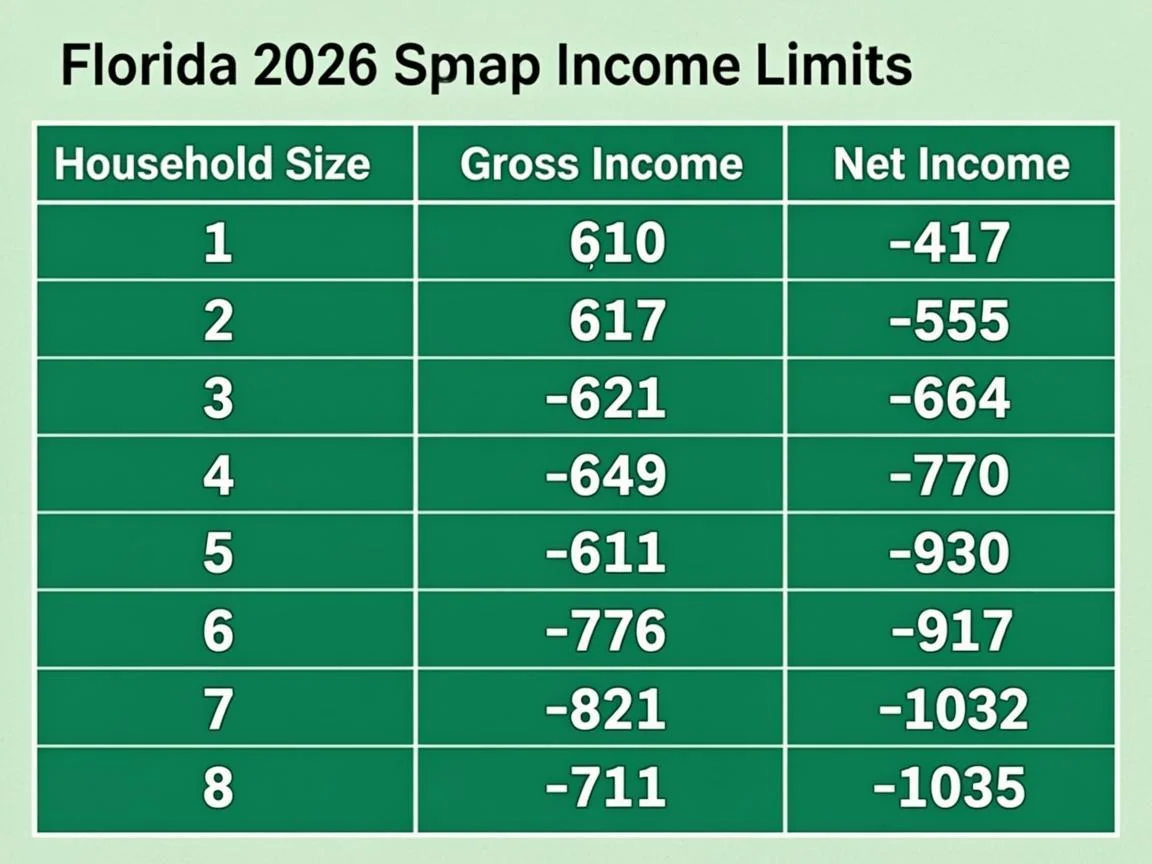
Florida's SNAP program operates under one statewide system managed by the Department of Children and Families (DCF).
Twenty-two million people live across Florida's 67 counties. From Miami-Dade in the south to Duval in the north, the same eligibility rules apply everywhere.
About 3.6 million Floridians receive SNAP benefits each month. That's roughly 16% of the state's population. The average benefit per person is about $181 per month.
Key Point: Unlike some states where counties set their own rules, Florida has uniform SNAP guidelines statewide. If you qualify in Orlando, you'd also qualify in Tampa or Jacksonville.
Florida SNAP Income Limits for 2026
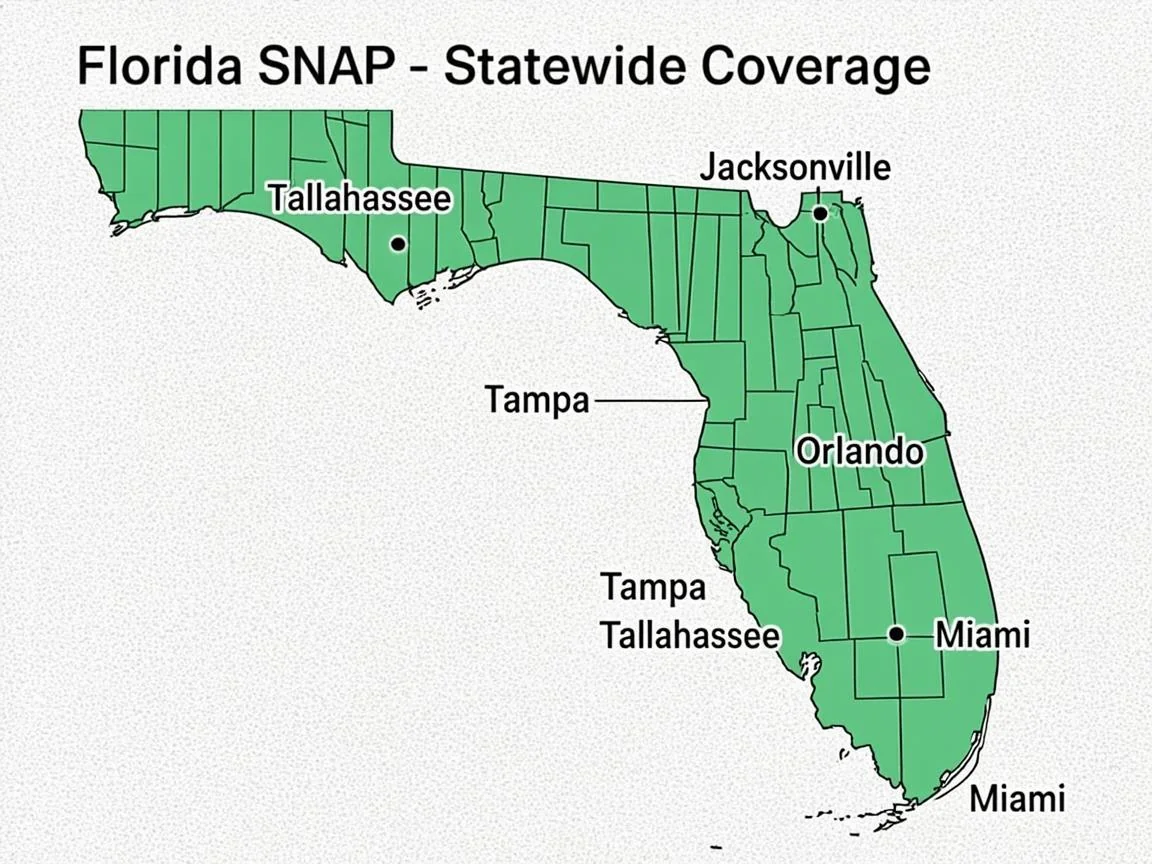
Florida uses Broad-Based Categorical Eligibility (BBCE), which raises the gross income limit from 130% FPL to 200% FPL.
For FY2026 (October 2025 - September 2026), here are Florida's SNAP income limits:
| Household Size | Gross Monthly (200% FPL) | Net Monthly (100% FPL) |
|---|---|---|
| 1 person | $2,610 | $1,305 |
| 2 people | $3,528 | $1,760 |
| 3 people | $4,446 | $2,215 |
| 4 people | $5,360 | $2,670 |
| 5 people | $6,278 | $3,125 |
| 6 people | $7,196 | $3,580 |
| 7 people | $8,114 | $4,035 |
| 8 people | $9,032 | $4,490 |
| Each additional person adds +$918 (gross) / +$455 (net) | ||
⚠️ Accuracy Alert: These are the correct FY2026 BBCE limits ($2,610/$5,360). Many competitor sites still display outdated FY2024 figures ($1,696/$3,483) which were replaced October 1, 2025. Always cross-check with official USDA Food and Nutrition Service data. Using wrong income limits could cause you to incorrectly assume you don't qualify when you actually do.
Florida-Specific Program Features
Florida's SNAP implementation has several unique characteristics that distinguish it from other states. Understanding these nuances helps you navigate the system more effectively and potentially maximize your benefits.
Access Florida Portal
Florida's online application system, called "Access Florida," allows 24/7 application submission, document upload, case status checking, and recertification. The mobile-friendly portal reduces office visits significantly. Create your account once and manage your case entirely online in most situations.
Community Partner Network
DCF partners with over 500 community organizations across Florida — libraries, churches, food banks, and social service agencies. These partners can help you apply, submit documents, and understand notices. Find your nearest partner on the DCF website by entering your zip code.
Application Processing Timeline: What to Expect
Understanding Florida's processing timeline helps you plan accordingly. Here's what happens after you submit:
| Day | What Happens | Your Action Required? |
|---|---|---|
| Day 1 | Application received; assigned case number | Save your confirmation number |
| Days 1-3 | Preliminary eligibility screening (expedited check) | Respond quickly if contacted |
| Days 3-7 | Interview scheduled (phone or in-person) | Prepare documents listed in notice |
| Days 7-14 | Verification of submitted documents | Submit any requested additional info |
| Days 14-30 | Final determination and notice mailed | Check mail; EBT card arrives if approved |
Note: Expedited applications follow an accelerated 7-day timeline. If you qualify for expedited service, you'll receive benefits within 7 days of applying — often within 3-5 days if all documentation is complete.
Common Florida SNAP Scenarios & Outcomes
Real examples help you understand how eligibility works in practice. Here are typical Florida household scenarios:
📌 Scenario 1: Single Parent in Miami (2 people) ▼
Situation: Mother with 1 child, works part-time at $1,800/month gross, pays $1,100 rent.
Gross Income Check: $1,800 ≤ $3,528 (200% FPL for 2) ✅ Passes
Net After Deductions: $1,800 - $198 (standard) - $1,100 (shelter, capped) = $502 net
Estimated Benefit: ~$350-400/month (varies by exact shelter costs)
Status: LIKELY ELIGIBLE — Apply at access.myflfamilies.com
📌 Scenario 2: Retired Couple in Tampa (2 people, both 67) ▼
Situation: Married couple, both receive $1,600/month combined Social Security, $400 medical expenses.
Gross Income Check: $1,600 ≤ $3,528 (200% FPL for 2) ✅ Passes
SUNCAP Consideration: Both over 60 = may qualify for SUNCAP with higher benefit calculation
Medical Deduction: $400 - $35 = $365 counts toward deductions
Estimated Benefit: ~$250-300/month regular SNAP or ~$320+ under SUNCAP
Status: ELIGIBLE — Ask DCF about SUNCAP when applying
📌 Scenario 3: Working Family in Orlando (4 people) ▼
Situation: Two parents, two children, gross income $4,200/month, $1,400 rent, $400 childcare.
Gross Income Check: $4,200 > $5,360 (200% FPL for 4) ✅ Passes BBCE limit
Deductions Applied: Standard ($597) + Shelter ($1,400) + Childcare ($400) = $2,397 total
Net Income: $4,200 - $2,397 = $1,803 (still under 100% FPL of $2,670)
Estimated Benefit: ~$150-200/month (lower due to higher net income)
Status: ELIGIBLE but lower benefit amount due to income level
Contacting Florida DCF: Key Phone Numbers & Resources
Keep these numbers handy. You'll need them during application, for questions, or if issues arise:
| Purpose | Phone Number | Hours |
|---|---|---|
| SNAP Applications & Questions | 1-866-762-2237 | Mon-Fri 8am-5pm ET |
| TTY (Hearing Impaired) | 1-800-955-8771 | 24/7 |
| Fraud Reporting Hotline | 1-866-762-2237 | Mon-Fri 8am-5pm ET |
| EBT Customer Service (FIS) | 1-888-356-3281 | 24/7 automated |
| Fair Hearing Requests | 1-866-762-2237 | Within 90 days of denial |
Pro Tip: When calling DCF, have your case number ready (starts with letters, followed by numbers). Write down who you spoke with, when, and what they said. This documentation helps if issues arise later.
Maximum Monthly Benefit Florida Pays in 2026
Your actual benefit depends on your net income after deductions. The maximum allotments for 2026:
Benefits load onto your EBT card between the 1st and 28th of each month, based on the 9th digit of your case number.
Deductions That Push Your Florida SNAP Payment Higher
Florida allows several deductions from your gross income. The lower your net income, the higher your benefit.
-
✓
Standard Deduction: Based on household size ($198-$1,988 for FY2026)
-
✓
Housing Costs: Rent/mortgage + utilities (capped at actual costs or shelter deduction cap)
-
✓
Dependent Care: Childcare or care for disabled adult so you can work
-
✓
Medical Expenses: For elderly/disabled members only (over $35/month)
-
✓
Child Support Paid: Legally obligated child support payments
Learn more about maximizing deductions in our complete guide to excess shelter deduction calculation.
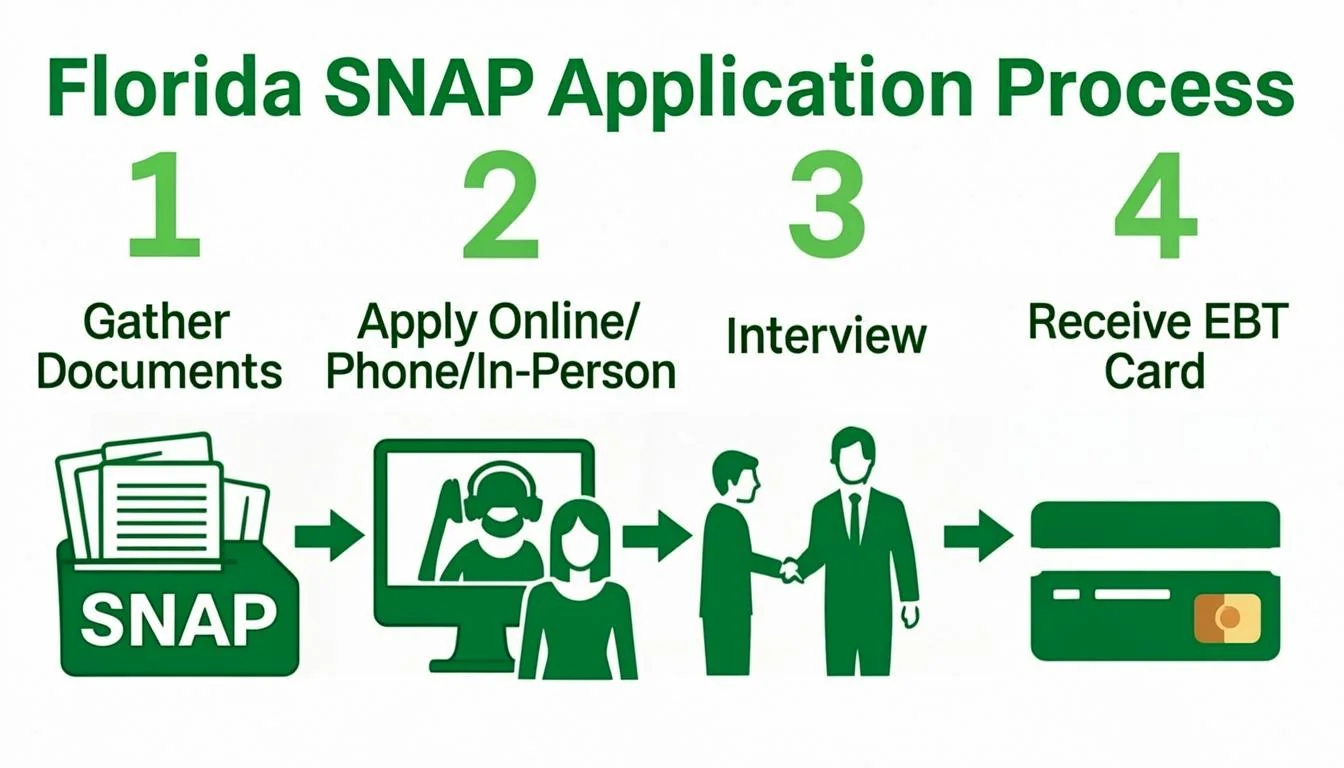
Filing a SNAP Application in Florida
You can apply for Florida SNAP benefits through multiple channels. Choose whichever works best for you.
🌐 Online (Fastest)
Apply via Access Florida. Create an account, submit documents electronically.
📞 By Phone
Call 1-866-762-2237. Have your documents ready. TTY: 1-800-955-8771.
🏢 In Person
Visit any DCF Community Partner office. Bring all documentation.
Documents You'll Need:
- • Photo ID (driver's license, state ID, passport)
- • Proof of residence (utility bill, lease agreement)
- • Income verification (pay stubs, award letters, self-employment records)
- • Social Security numbers for all household members
- • Bank statements (if applicable)
- • Medical expense receipts (for elderly/disabled applicants)
Processing typically takes 7-30 days. Expedited benefits available within 7 days for qualifying households.
Who Florida Approves for SNAP
To qualify for Florida SNAP, you must meet these basic requirements:
Live in Florida. No minimum residency period required, but you must intend to stay.
Gross income at or below 200% FPL (see table above). Net income at or below 100% FPL after deductions.
$2,750 in resources ($4,250 if someone is 60+ or disabled). Home and car don't count.
Able-bodied adults without dependents (ABAWDs) must work 80 hours/month or qualify for exemption.
ABAWD Work Rules in Florida
If you're an able-bodied adult without dependents aged 18-52, special work rules apply in Florida.
You must meet ONE of these criteria each month to keep your full SNAP benefits:
- • Work at least 80 hours per month (paid or volunteer)
- • Participate in a qualifying work program for 80 hours/month
- • Combine work and work program participation to reach 80 hours
- • Meet an exemption criterion (see below)
ABAWD Exemptions in Florida:
- • Physically or mentally unfit for work (with documentation)
- • Caring for a child under 18 or incapacitated household member
- • Pregnant
- • Full-time student (at least half-time in approved program)
- • Receiving unemployment benefits and complying with work search
- • Living on a reservation or certain Native American lands
Warning: Failure to meet ABAWD rules results in time-limited benefits — only 3 months in a 36-month period unless you comply or qualify for an exemption.
Where Florida EBT Works at the Register
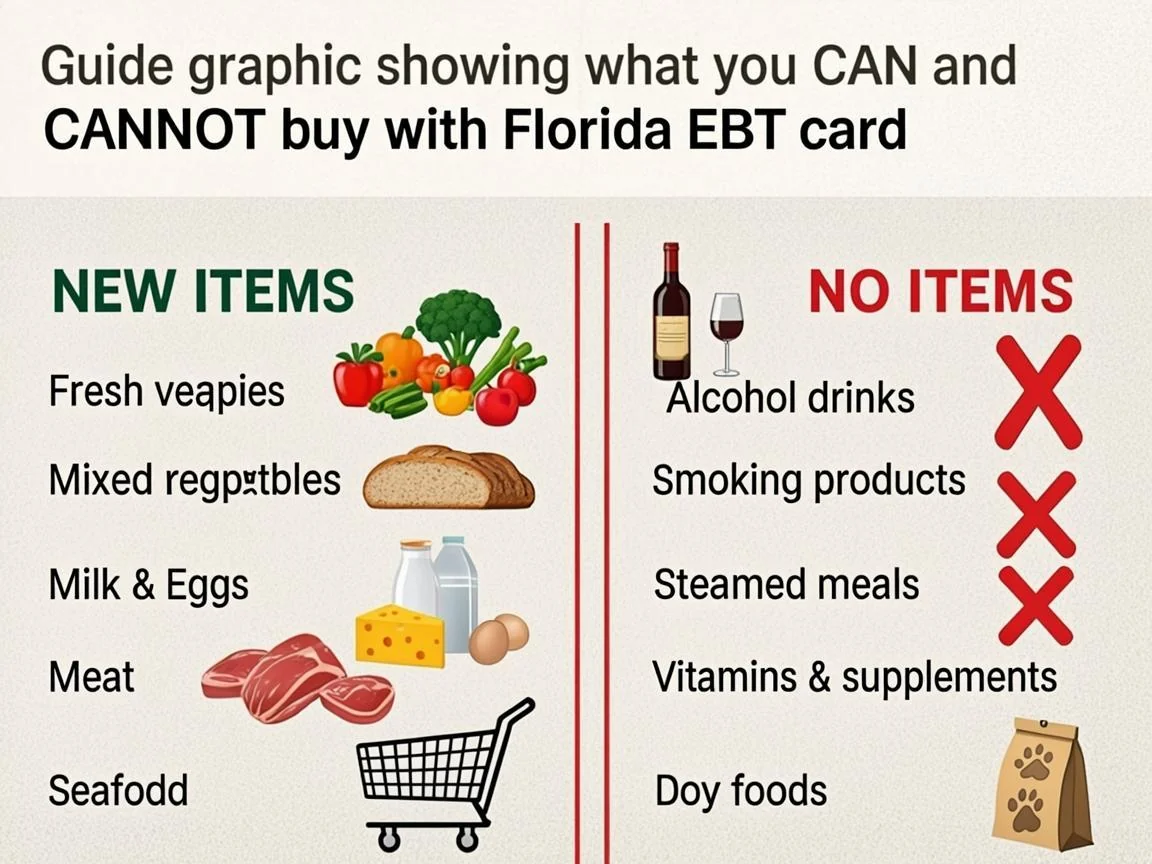
Your Florida EBT card works at any retailer authorized by USDA to accept SNAP benefits.
What You CAN Buy with Florida EBT:
- ✅ Fruits and vegetables (fresh, frozen, canned)
- ✅ Bread, cereals, rice, pasta
- ✅ Dairy products (milk, cheese, yogurt)
- ✅ Meats, poultry, fish
- ✅ Snacks and non-alcoholic beverages
- ✅ Seeds and plants that produce food
What You CANNOT Buy:
- ❌ Alcohol, tobacco, vaping products
- ❌ Hot foods ready to eat (unless part of Restaurant Meals Program)
- ❌ Vitamins, medicines, supplements
- ❌ Pet food, paper products, cleaning supplies
- ❌ Cosmetics, personal care items
Florida participates in the Restaurant Meals Program (RMP) in limited areas. Eligible elderly, disabled, or homeless recipients may use EBT at participating restaurants.
SUNCAP: Florida's Simplified Program for Seniors
SUNCAP (Simplified Nutrition Assistance Program) is Florida's specialized version of SNAP for residents aged 60 or older who receive Social Security income.
Why SUNCAP Might Be Better Than Regular SNAP:
- • Simplified recertification — Less frequent paperwork
- • Higher income disregard — More of your Social Security doesn't count
- • No ABAWD work rules — Age exempts you automatically
- • Medical expense deduction — Easier to claim out-of-pocket medical costs
- • Telephone recertification — May not need in-person interviews
If you're 60+ and currently receive Social Security, ask your DCF caseworker about SUNCAP when you apply. Many eligible seniors end up with higher monthly benefits under SUNCAP than standard SNAP.
Florida SNAP Questions, Real Answers
What is the income limit for SNAP in Florida 2026? ▼
How long does it take to get approved for Florida SNAP? ▼
Can I use my Florida EBT card in another state? ▼
What happens if I'm denied Florida SNAP benefits? ▼
Do college students qualify for Florida SNAP? ▼
How often do I need to recertify for Florida SNAP? ▼
Keeping Florida Benefits Active
Once approved, you must maintain eligibility to keep receiving SNAP benefits.
✅ DO These Things:
- • Report income changes within 10 days
- • Keep your address current with DCF
- • Save your EBT receipts for records
- • Recertify before deadline
- • Use benefits regularly (accounts close after inactivity)
❌ DON'T Do These:
- • Trade or sell EBT benefits (felony in Florida)
- • Lend your card to others
- • Buy prohibited items intentionally
- • Ignore recertification notices
- • Forget your PIN (3 wrong tries = card lockout)
If your benefits are discontinued, you can reapply at any time. There's no waiting period between applications.
More Food Help Across Florida
Beyond SNAP, Florida offers additional nutrition assistance programs:
WIC (Women, Infants, and Children)
For pregnant women, breastfeeding mothers, infants, and children under 5. Provides nutritious foods, breastfeeding support, and referrals. Call 1-800-342-3042.
School Breakfast & Lunch Programs
Free or reduced-price meals for K-12 students. Apply through your child's school. Over 2 million Florida children participate annually.
Senior Nutrition Programs
Meals on Wheels, congregate dining sites, and commodity supplemental food programs for adults 60+. Contact your local Area Agency on Aging.
Food Banks & Pantries
Feeding Tampa Bay, Feeding South Florida, and Second Harvest Food Bank serve millions across Florida. No eligibility requirements.
Related SNAP Guides
SNAP Income Limits 2026
Complete guide to gross and net income thresholds by household size.
Alabama SNAP EBT Guide
Neighboring state guide for comparison or if you move.
Excess Shelter Deduction
Maximize your housing deduction for higher SNAP benefits.
SNAP Application Step by Step
Complete process from first application to receiving your EBT card.
History of SNAP in Florida
Florida's participation in the Supplemental Nutrition Assistance Program dates back to the early days of federal food assistance. The state has consistently maintained one of the largest SNAP caseloads in the nation, reflecting both its substantial population and the economic diversity across its 67 counties.
The program underwent significant modernization in the early 2000s when Florida transitioned from paper food stamps to the EBT card system. This change improved security, reduced stigma, and made benefits easier to use at authorized retailers throughout the state.
In 2010, Florida adopted Broad-Based Categorical Eligibility (BBCE), a policy decision that dramatically expanded access to SNAP benefits by raising the gross income limit from 130% to 200% of the Federal Poverty Level. This change allowed thousands of working families to qualify who previously earned too much to receive assistance.
The Department of Children and Families (DCF) administers SNAP through its Access Florida system, which processes applications, determines eligibility, and issues benefits. DCF operates service centers in every major metropolitan area and maintains a robust online portal for applications and case management.
DCF Service Centers by Region
Florida is divided into several administrative regions for SNAP processing. Each region has multiple DCF Economic Self-Sufficiency offices where you can apply in person, drop off documents, or speak with a caseworker about your benefits.
| Region | Coverage Area | Main Offices |
|---|---|---|
| Region 1 - Panhandle | Pensacola, Tallahassee, Jacksonville area | Pensacola, Tallahassee, Jacksonville |
| Region 2 - Central North | Gainesville, Ocala, Orlando north | Gainesville, Ocala, Sanford |
| Region 3 - Tampa Bay | Tampa, St. Petersburg, Clearwater | Tampa, St. Pete, Bradenton |
| Region 4 - Orlando/Central | Orlando, Kissimmee, Melbourne | Orlando, Kissimmee, Melbourne |
| Region 5 - South Florida | Fort Lauderdale, Miami, West Palm Beach | Ft. Lauderdale, Miami, WPB |
To find your nearest office, visit the DCF website or call the statewide customer service number at 850-300-4323. Many services are also available through the MyACCESS online portal.
Special SNAP Programs in Florida
Fresh Access Bucks
Feeding Florida operates the Fresh Access Bucks program at over 60 farmers markets and produce stands across the state. When you use your EBT card to purchase fresh fruits and vegetables, the program matches your spending dollar-for-dollar, effectively doubling your purchasing power for healthy foods.
School Meals Connection
SNAP-eligible children in Florida automatically qualify for free school breakfast and lunch through the direct certification process. Families receiving SNAP do not need to complete a separate application for school meal benefits.
WIC Coordination
Many Florida families receive both SNAP and WIC (Women, Infants, and Children) benefits. While SNAP covers general food purchases, WIC provides specific nutritious foods for pregnant women, new mothers, and young children. You can use both benefits together to maximize your family's nutrition assistance.
Disaster SNAP (D-SNAP)
When hurricanes or other disasters strike Florida, DCF may activate D-SNAP to provide quick replacement benefits for food lost due to the emergency. D-SNAP has simplified eligibility criteria and faster processing than regular SNAP applications.
Common Application Mistakes to Avoid
Not Reporting All Income
Include all sources: wages, self-employment, Social Security, unemployment, child support received. Underreporting can lead to benefit repayment demands.
Forgetting Deductions
Many applicants miss allowable deductions: shelter costs, dependent care, medical expenses over $35/month for elderly/disabled. These reduce countable income and can increase benefits.
Missing the Interview
The eligibility interview is mandatory. Missing it without rescheduling can result in denial. Answer calls from unknown numbers during your application period.
Not Recertifying on Time
SNAP benefits require periodic recertification. Submit your renewal paperwork before the deadline to avoid gaps in benefits. Set reminders for your recertification date.

Wasim Akram
Founder & Lead Researcher · Food Stamp Eligibility Calculator
Wasim Akram is the founder and lead SNAP benefits researcher at FoodStampEligibilityCalculator.com. Every income limit, deduction, and benefit figure on this page is reviewed against the official USDA Food and Nutrition Service Handbook for the 2026 fiscal year. He also publishes broader U.S. public benefits content at Digitalwasim.com.