
One of the most persistent myths about SNAP is that owning a car disqualifies you. The reality is far more forgiving. Most SNAP households own at least one vehicle, and the program has built-in protections so that a working car does not count against your food benefit. The confusion comes from the fact that vehicle rules vary by state, and the federal baseline is not what most states actually use.
This guide breaks down how SNAP treats vehicle value, which tests apply, which vehicles are automatically exempt, and how to find your state's specific rule so you do not leave money on the table.
Table of Contents
- 1How SNAP Treats Vehicle Value
- 2The Federal Vehicle Asset Limit
- 3State Options That Raise or Eliminate the Limit
- 4Fair Market Value vs Equity Test
- 5Vehicle Exemptions You Should Know
- 6Income-Producing Vehicles
- 7Transportation to Work or Training
- 8Vehicle for a Disabled Household Member
- 9Relocating to a New Home
- 10One Vehicle Per Adult
- 11State-by-State Vehicle Rules
- 12What Happens If Your Car Is Over the Limit
- 13Recertification and Vehicle Value Changes
- 14Final Thoughts on Vehicles and SNAP
- 15Sources
How SNAP Treats Vehicle Value
SNAP is a federal program, but states have broad authority to set their own asset rules through a mechanism called Broad-Based Categorical Eligibility, or BBCE. Under BBCE, states can raise or eliminate the asset limit entirely, and they can also change how vehicles are counted. The federal vehicle rule still exists as a fallback, but in most states it never applies.
The SNAP asset limits guide covers how cash, bank accounts, and other resources are treated. Vehicles are a separate category with their own rules. A car is not just another asset. SNAP recognizes that a reliable vehicle is usually necessary for working, shopping for groceries, and getting to medical appointments.
The Federal Vehicle Asset Limit
Under the federal SNAP rules in 7 CFR 273.2, the fair market value of any vehicle exceeds a threshold set annually, currently around $15,000. If your vehicle is worth more than that threshold, the excess amount counts toward your resource limit. The federal resource limit is $3,000 for households with an elderly or disabled member, and $2,750 for most other households.
In plain terms, if your only vehicle is worth $20,000 under the federal rule, $5,360 of that value counts as a resource. That would put you over the federal limit by itself. But again, this federal rule only applies in states that have not adopted BBCE or that have chosen to keep the vehicle test.
State Options That Raise or Eliminate the Limit
Most states use BBCE to either raise the vehicle limit significantly or exclude vehicles entirely from the resource test. As of the most recent state plan data, around 35 states exclude at least one vehicle per adult household member from the resource test. About 20 states exclude all vehicles entirely.
States that have eliminated the vehicle test entirely include California, New York, Pennsylvania, Massachusetts, Connecticut, and many others. In those states, you can own a paid-off luxury car and still qualify for SNAP, as long as your income is within the limit. The vehicle value simply does not enter the calculation.
To understand whether your state uses BBCE, check our SNAP benefits by state resource, which lists each state's asset and vehicle rules. You can also call your local SNAP office and ask directly whether they use the federal vehicle test or a state-specific rule.
Fair Market Value vs Equity Test
States that do count vehicles use one of two methods. The fair market value test looks at what the car would sell for on the open market, usually using a valuation guide like Kelley Blue Book or NADA. The equity test looks at your ownership stake, meaning the market value minus any loan balance.
The equity test is generally more favorable for households that still owe money on their car. If your vehicle is worth $25,000 but you owe $20,000 on the loan, your equity is $5,360. Under the fair market value test, the full $25,000 is what gets measured against the threshold.
Some states use a hybrid approach. They apply the fair market value test to additional vehicles beyond the first, and the equity test to the primary vehicle. This is meant to prevent households from hiding wealth in car collections while protecting the family car that gets driven every day.
Vehicle Exemptions You Should Know
Even in states that count vehicle value, certain vehicles are automatically exempt from the resource test. These exemptions are federal law, so they apply everywhere.
Income-Producing Vehicles
If a vehicle is used to produce income, it is exempt. This includes a taxi, delivery truck, farming equipment, fishing boat, or a work truck used by a contractor. The key is that the vehicle must be actively used for the trade or business. A pickup truck that you occasionally use for side jobs may not qualify if it is primarily a personal vehicle.
Transportation to Work or Training
A vehicle used primarily to transport a household member to and from work, job training, or education that prepares them for employment is exempt. This exemption is especially important for households where one car is the only way to get to a job site. If you drive 30 miles each way to a warehouse job, your car is almost certainly exempt under this rule.
Vehicle for a Disabled Household Member
A vehicle specially equipped for a disabled household member, or one used primarily to transport a disabled person, is exempt. This covers wheelchair-accessible vans, vehicles with hand controls, and standard cars that are the primary transportation for someone who cannot use public transit due to disability.
Relocating to a New Home
A vehicle used as a home, such as a camper or RV that is the household's primary residence, is exempt. This is relevant for homeless households who live in their vehicle.
One Vehicle Per Adult
In many BBCE states, one vehicle per adult household member is automatically excluded from the resource test, regardless of value. If your household has two adults, both cars are protected. This is the most common configuration in states that have not eliminated the vehicle test entirely.
State-by-State Vehicle Rules
Because vehicle rules vary so widely, the only way to know for sure is to check your state's SNAP administrative rules or call your local office. Here is a general breakdown of the three main approaches states take.
The first group eliminates the vehicle test entirely. This includes most Northeast states, the West Coast, and several Midwest states. In these states, you report your vehicle on the application for completeness, but it does not affect eligibility.
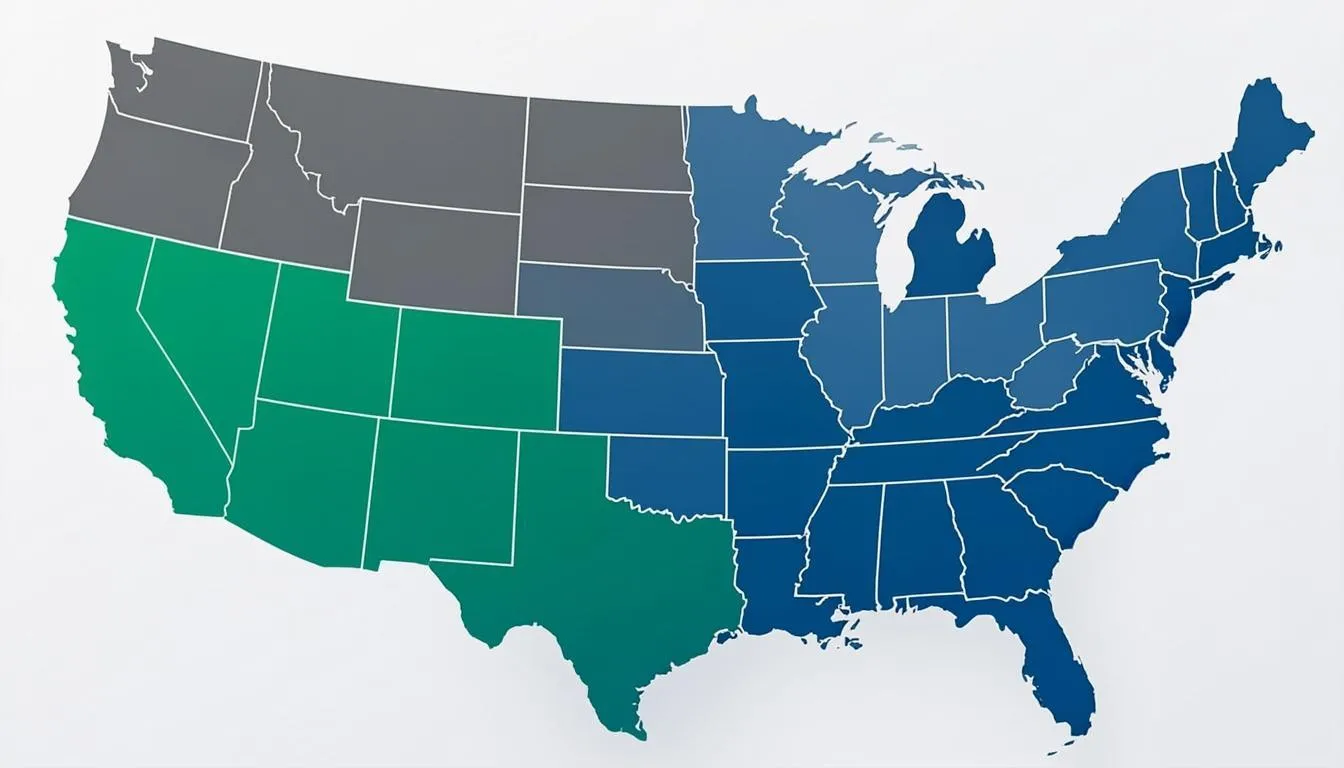
The second group excludes one vehicle per adult household member and applies the resource test to additional vehicles. This is common in several Southern and Mountain West states. If you own three cars and have two adults in the household, the third car's value gets tested.
The third group uses the federal vehicle test or a state-specific limit. These are a small number of states that have not adopted BBCE for vehicles. In these states, vehicle value can affect eligibility, so it is worth understanding the fair market value and equity tests before applying.
What Happens If Your Car Is Over the Limit
If your state counts vehicle value and your car exceeds the limit, you have a few options. The most common is to apply anyway and let the caseworker run the calculation. Many households discover that after exemptions and deductions, they still qualify even with a valuable car.
If the vehicle truly disqualifies you, the worst action you can take is to sell it for cash and apply the next month. That converts a partially-exempt vehicle into a fully-countable liquid resource, which is much harder to exclude. Selling a car to qualify for SNAP is almost always a mistake unless you are replacing it with a less valuable vehicle that you actually need.
Transferring the vehicle to a friend or family member to get under the limit is also risky. SNAP has a transfer penalty for assets transferred below fair market value within 3 months of applying. The penalty period is based on the uncompensated value divided by the average monthly SNAP benefit for your household size.
Recertification and Vehicle Value Changes
At recertification, your caseworker may ask whether you have acquired or sold any vehicles since your last interview. If your state counts vehicle value, you should report changes. If your state excludes vehicles entirely, you only need to report new vehicles for the record, not for the resource calculation.
Vehicle depreciation works in your favor here. A car worth $18,000 when you applied may be worth $13,000 at recertification a year later. If your state uses the fair market value test and your car dropped below the threshold, that can move you from ineligible to eligible without any other change.
The SNAP recertification guide covers the full recertification process, including what to bring and how to handle changes in assets. If you recently moved to a state with different vehicle rules, also review the moving to a new state guide, since vehicle treatment can change when you cross state lines.
Final Thoughts on Vehicles and SNAP
The vehicle asset limit is one of the most misunderstood parts of SNAP eligibility. The federal rule sounds strict, but in practice, the vast majority of applicants live in states that have relaxed or eliminated the vehicle test. Do not assume your car disqualifies you before checking your state's specific rule.
If you have a working vehicle, keep it. SNAP is designed to support working households, not penalize them for owning the tools they need to get to a job. Use the SNAP eligibility calculator to estimate your benefit based on income and household size, and let the vehicle question sort itself out during the application interview.
Want to know if your income qualifies? Use our free calculator to check your SNAP eligibility in about 90 seconds — no paperwork, no commitment, just an honest answer.
Check My EligibilitySources
- USDA Food and Nutrition Service, SNAP State Options Report
- Code of Federal Regulations, 7 CFR 273.2 (Resources)
- USDA Food and Nutrition Service, Broad-Based Categorical Eligibility Guidance
- Congressional Research Service, SNAP Categorical Eligibility
- Center on Budget and Policy Priorities, SNAP Asset Limits and Vehicle Rules