Quick Answer: Yes, SNAP covers infant formula of any brand, plus baby food, cereal, and snacks. Diapers, wipes, bottles, and other baby gear are never covered. WIC stacks on top of SNAP and should carry the formula load first, with diaper banks filling the gap.
Feeding a baby is expensive in a way that catches almost every new parent off guard. Formula alone can run past a hundred dollars a month, and diapers stack on top weekly. Two different programs promise help here, and each one covers a different half of the same problem.
The good news is that the two programs were designed from the very beginning to stack together. WIC and SNAP can sit on the same family, and knowing which pays for what stretches every dollar.
Table of Contents
- 1Formula Is Covered, in Every Brand, Every Form
- 2What Else the Card Covers for a Baby
- 3The Diaper Problem and Where the Help Actually Is
- 4How WIC and SNAP Work Together for Formula
- 5Budget Moves That Stretch the Formula Dollar
- 6Pumping, Breast Milk, and Other Edge Questions
- 7A Realistic Month With Both Programs
- 8If Formula Runs Out Before the Month Does
- 9Frequently Asked Questions
Formula Is Covered, in Every Brand, Every Form
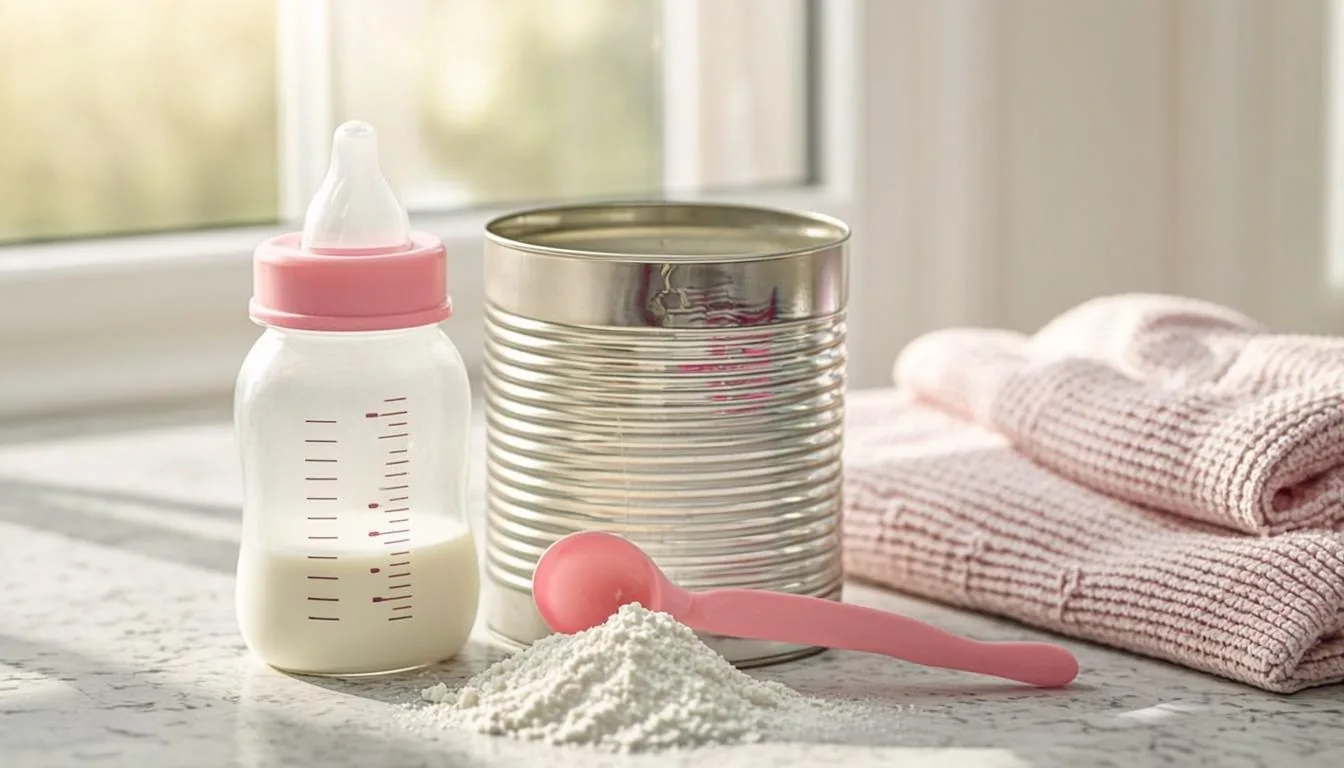
Infant formula sits squarely inside the SNAP eligible food list, in every format stores normally sell. Powder, liquid concentrate, and ready-to-feed all qualify, and store brands, name brands, and sale items are yours to choose.
That brand freedom is the quiet advantage over WIC, which contracts with specific makers and issues vouchers for particular products. With SNAP, a parent can chase the sale price or the store brand that runs cheaper per can. The federal eligible food rules group infant formula together with staple groceries, which is why coverage is automatic.
Quantity is never capped either, so stocking two or three cans ahead of a storm spends benefits like any run.
One real boundary matters here, and the coverage follows the word infant printed on the formula label. Formulas marketed for toddlers past the first birthday are treated as regular drinks, and most sit outside coverage. Whole milk from the dairy case is eligible, and pediatricians generally endorse the switch at 12 months anyway.
What Else the Card Covers for a Baby
Baby food in jars and pouches is eligible food, including infant cereals, teething snacks, and purees. Fruit and vegetable options and toddler snacks designed as food all ring up under SNAP without any argument.
Breastfeeding parents can spend benefits on foods that support milk supply, with no restriction tied to any feeding method.
One more quiet rule works in the family's favor during a month loaded with formula cans. Groceries bought with SNAP are exempt from sales tax automatically in every state, which saves real money every trip. No coupon and no paperwork produces that discount, because the payment method itself does the work.
The lines appear where products stop being food, and the scanner enforces them without exceptions. The list below is the practical split most parents need, covering nearly every item a trip touches.
| Baby Item | SNAP? | Notes |
|---|---|---|
| Infant formula (any brand) | Yes | Powder, concentrate, ready-to-feed |
| Baby food jars and pouches | Yes | All flavors and stages |
| Infant cereal and snacks | Yes | Treated as groceries |
| Diapers | No | Nonfood, all types |
| Wipes and formula dispensers | No | Nonfood items |
| Bottles and pacifiers | No | Feeding equipment |
The Diaper Problem and Where the Help Actually Is
Diapers cost roughly $70 to $90 a month per child, and no federal food program covers them. That gap hits hardest exactly where budgets are thinnest, because many daycare programs require parents to supply diapers. The workarounds are real, and they start with knowing the right programs and charities by name.
Parents who treat diapers as a fixed monthly expense, like rent, consistently do better financially every month.
TANF cash benefits are the single biggest legal channel for covering the diaper gap in most states. Cash assistance loads onto the same EBT card in most states and spends like money, which includes diapers and wipes. Families receiving both SNAP and TANF can route the diaper budget through the cash side without any conflict.
Diaper banks are the second channel, operating in every state through the national network and local affiliates. Churches, family resource centers, and some health departments distribute free diapers on a weekly or monthly schedule. Supply varies a lot by location, so call ahead rather than driving across town on hope.
Timing tricks help on the margin, and hospital pads with a modest cloth rotation can bridge a thin week. Some pediatric clinics keep small diaper stashes too, and asking directly at a well-child visit costs nothing.
Tip: Cloth diapering converts the monthly cost into a one-time buy, and library or nonprofit lending programs in some cities lend starter kits. Even two or three cloth diapers used at home can cut a package a month off the bill.
How WIC and SNAP Work Together for Formula
WIC is the purpose-built infant nutrition program, and its formula package is generous within its brand list. Monthly allowances are sized by the baby's age, and the federal WIC program page explains the package structure.
SNAP then covers everything WIC does not, which is exactly where the stacking starts to pay off. A baby whose WIC allowance runs out ten days early still needs formula, and SNAP pays for any brand. The same stacking applies to baby food once solids start somewhere around the six month mark.
Eligibility for one program also strengthens the other, because WIC uses a more generous income test. Families receiving SNAP often auto-qualify for WIC through adjunct eligibility, which removes a whole application step. Our SNAP versus WIC comparison maps both programs side by side, and the combined benefits guide shows the stacking order.
Budget Moves That Stretch the Formula Dollar
Prices vary wildly between stores for identical cans, so comparing before you buy is the first move. Warehouse clubs, big-box stores, and discount grocers routinely undercut the corner pharmacy, and sales rotate on a monthly rhythm.
Store brands deserve a harder look because FDA rules force every can sold to meet the same nutritional standard.
Buying patterns matter as much as brands, because powder costs meaningfully less per feeding than ready-to-feed liquid. Larger cans usually beat small ones on price, and our stretching guide covers the broader basket tactics.
Pumping, Breast Milk, and Other Edge Questions
Feeding choices raise a few boundary questions that are worth settling early in the process. Breast milk itself is not a product you buy with benefits, and no program pays another parent for milk. Milk donated through a nonprofit milk bank costs the family nothing and raises no SNAP question at all.
Pump parts and bottles stay in the nonfood column, while WIC funds lactation support for its participants.
A Realistic Month With Both Programs
Numbers make the stacking concrete, so consider a family of three with a six-month-old and no other income. That household clears the fiscal 2027 gross limit of $2,960 and would receive the $808 three-person maximum.
Your own numbers will differ with income and state rules. The free SNAP eligibility calculator gives you that exact figure in seconds.
Estimate Your Monthly Benefit: You can calculate your exact estimated SNAP allotment in under 2 minutes with our free Food Stamp Eligibility Calculator.
WIC then layers its own package on top, adding the formula allowance, infant cereal, jars, and foods for the parents. The combined basket covers nearly all of the baby's nutrition, and the income limits table helps families screen themselves.
If Formula Runs Out Before the Month Does
Running dry is a crisis that has real infrastructure behind it, so use it without embarrassment. Pediatrician offices often keep emergency formula samples, and WIC offices can sometimes issue early vouchers in genuine shortages. Food banks and pantries increasingly stock formula precisely because the need is so common among new families.
Nobody should ever dilute formula to stretch it, and pediatric guidance on this point is completely blunt. Watered-down formula has caused serious illness in infants, and the risks build faster than most parents expect. The resources above exist for exactly this moment, and using them is what they were built for.
Ask for help early rather than waiting until you reach the bottom of the last can. Every resource listed here works better with a few days of lead time, and none requires explaining yourself.
Longer term, a benefit increase may be available if the baby's arrival changed the size of your household. New household members raise both the income limit and the allotment, which our pregnancy and new baby guide explains. Reporting the birth promptly adjusts the case upward instead of leaving real money on the table.
Ready to check your numbers? Use our interactive Food Stamp Eligibility Tool to see how deductions impact your benefit before applying.
Frequently Asked Questions
Does SNAP cover all brands of infant formula?
Yes, every brand of infant formula that is eligible for sale under FDA rules can be bought with SNAP benefits. That includes powder, liquid concentrate, and ready-to-feed formats, and it also includes every store brand on the shelf.
Can I buy diapers with SNAP benefits?
No, diapers are classified as a nonfood item, and SNAP benefits cannot be used to purchase them. Wipes, bottles, and pacifiers sit in the same nonfood bucket. TANF cash benefits, diaper banks, and local charities are the main alternatives families use instead.
Is toddler formula covered by SNAP?
Toddler formulas, transition milks, and toddler drinks fall outside infant coverage because they are marketed for children over 12 months. Whole milk from the dairy case is covered by SNAP, and it is usually the cheaper path once your baby graduates from formula.
Should I use WIC or SNAP for formula?
Use WIC for its monthly formula allowance first, because it is free and sized for your baby's age. Then use SNAP to fill whatever gap remains at the register, and remember that families can receive both programs at the same time.
Do baby food pouches count as eligible food?
Yes, jarred and pouched baby food, infant cereals, and baby snacks are all eligible foods under SNAP. They are simply groceries designed for babies, and the program treats them exactly like any other food you wheel through the checkout lane.
Can I use SNAP for formula if WIC already covers my baby?
Yes, and the two programs do not conflict over the same can. WIC covers specific brands in set amounts, while SNAP covers extra cans between WIC pickups or alternative brands when WIC shelves are empty. Keep WIC items separate at checkout, then run SNAP as its own transaction.
Does SNAP cover specialty formulas for allergies or reflux?
Medical need does not change the label rule: any infant formula marketed as food qualifies, including hypoallergenic, soy, and gentle shelf varieties. Specialty medical formulas billed through a pharmacy as non-food items fall outside SNAP and usually route through insurance or WIC instead.
Can I buy breastfeeding supplies like pumps or pads with SNAP?
No, because equipment and personal care items fall outside the federal SNAP food definition. Breast pumps, nursing pads, and nursing bras usually come free through health insurance, WIC, or Medicaid. Using those channels saves your whole monthly SNAP benefit for groceries and formula.