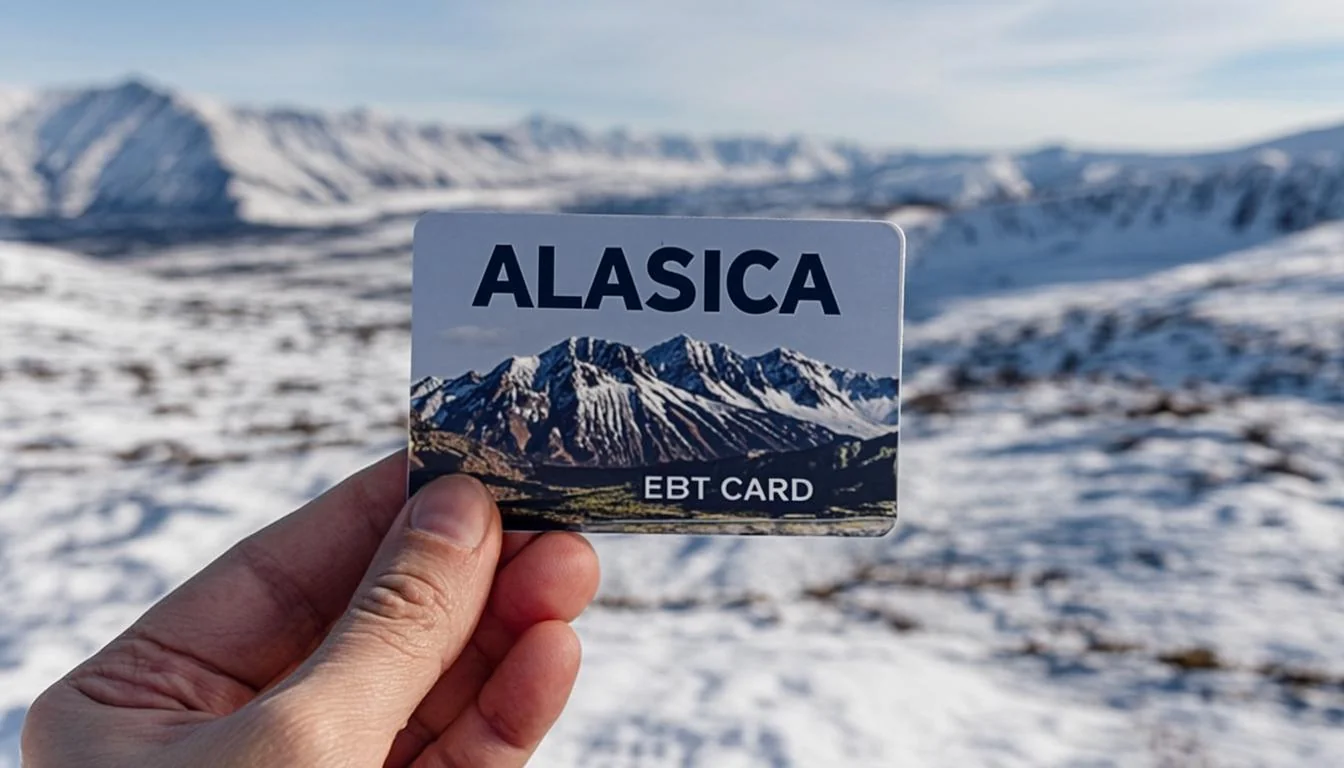
Alaska runs the SNAP program differently than any other state, and the differences start with the card in your wallet. The state's vast geography, sparse population, and dependence on air freight for grocery deliveries mean that benefit amounts, deposit schedules, and even the list of eligible stores look nothing like what a recipient in California or Florida would see. If you live in Anchorage, Bethel, or a village accessible only by small plane, understanding how the Alaska EBT card works is essential to making your food budget stretch.
This guide walks through the Alaska EBT program from application to checkout. We cover how benefits are calculated under Alaska's unique cost-of-living adjustment, when deposits load each month, where the card works both inside and outside Alaska, what to do about a lost card when the nearest DHR office is hundreds of miles away, and how to use the card at remote village stores that may not have a working phone line on the day you shop.
Key takeaway: Alaska loads SNAP benefits on the 1st of every month for all recipients, regardless of case number. Benefit amounts are significantly higher than in the Lower 48 because of the state's Cost of Living Adjustment, with rural recipients receiving the largest allotments. The card works at any authorized retailer nationwide, but most rural Alaska villages have only one or two authorized stores, which limits shopping options.
Table of Contents
- 1Why Alaska SNAP Benefits Are Higher Than Other States
- 2The Alaska EBT Deposit Schedule
- 3Where the Alaska EBT Card Works
- 4What You Can and Cannot Buy with Alaska EBT
- 5Checking Your Alaska EBT Balance
- 6Lost, Stolen, or Damaged Alaska EBT Cards
- 7Using Alaska EBT at Farmers Markets
- 8Online Shopping with Alaska EBT
- 9What to Do If Your Alaska EBT Card Is Declined
- 10Frequently Asked Questions
Why Alaska SNAP Benefits Are Higher Than Other States

The federal government recognizes that food in Alaska costs substantially more than food in the rest of the country, and the SNAP program adjusts benefit amounts accordingly. The adjustment is based on a federal Cost of Living study that surveys grocery prices in Anchorage, Fairbanks, Juneau, and a sample of remote villages. The study finds that a gallon of milk that costs $3.50 in Seattle can cost $9 or more in a Bering Sea village, and a loaf of bread that is $2.50 in the Lower 48 can run $6 in Bethel.
Because of this, Alaska has three separate maximum monthly allotment tables. The first applies to urban areas, which means Anchorage, Fairbanks, and Juneau. The second applies to rural areas, which includes places like Kenai, Kodiak, and the Mat-Su Valley. The third and highest applies to remote rural areas, which covers villages accessible only by air or boat, such as those in the Yukon-Kuskokwim Delta, the Aleutian Islands, and the North Slope. A household of four in an urban area receives a maximum allotment that is roughly 25 percent higher than the same household in the Lower 48, while a household of four in a remote area receives about 60 percent more.
The exact dollar amounts change each October 1st when the federal fiscal year begins. For the current fiscal year, the maximum monthly allotment for a one-person household in urban Alaska is around $326, in rural Alaska it is about $396, and in remote rural Alaska it is approximately $458. A four-person household in remote rural Alaska can receive up to $1,672 per month. For the full table by household size and region, see our 2026 SNAP allotment chart which includes the Alaska-specific columns.
The Alaska EBT Deposit Schedule
Unlike most states that stagger deposits across the month, Alaska loads benefits for every recipient on the same day. The deposit posts at midnight Alaska time on the 1st of each month, and the funds are available immediately. If the 1st falls on a weekend or holiday, the deposit still happens on that date because the EBT system is electronic and does not observe banking holidays. This means that Alaska grocery stores see their heaviest traffic on the 1st and 2nd of each month, and shopping on those days often means longer lines and picked-over shelves.
If you have just been approved for SNAP in Alaska, your first deposit may not align with the 1st of the following month. The Division of Public Assistance processes new applications within 30 days, and the first deposit is prorated from the date of approval rather than paid for the full month. A household approved on the 15th will receive roughly half of the standard allotment for that first partial month, then the full allotment on the 1st of every subsequent month.
For households facing immediate hardship, Alaska offers expedited SNAP, which puts benefits on the EBT card within 7 calendar days of application. To qualify, a household must have less than $150 in monthly gross income and less than $100 in liquid resources, or be a migrant or seasonal farmworker with very limited resources. Expedited benefits are not a separate program; they are simply the first month's SNAP allotment loaded early, with the standard recertification process applied afterward.
Where the Alaska EBT Card Works
The Alaska-issued EBT card works at any SNAP-authorized retailer in the United States, including all 50 states and the territories. The card uses the national Quest network, so a swipe at a Fred Meyer in Seattle or a Walmart in Minneapolis pulls funds from your Alaska account. This is useful for recipients who travel for medical appointments, family visits, or work, and it means you do not need to plan separately for food purchases while out of state.
Within Alaska, the retail landscape depends heavily on where you live. In Anchorage, recipients can shop at Fred Meyer, Carrs (Safeway), Walmart, Target, Three Bears, Costco, Sam's Club, and Natural Pantry, along with smaller independent grocers. Fairbanks has a similar selection. Juneau has Fred Meyer, Foodland IGA, and Costco. In rural hubs like Bethel, Nome, and Kotzebue, the main options are small regional chains like Alaska Commercial Company and the village corporation stores, which often carry a limited selection of fresh produce and rely on air freight for restocking.
In the smallest villages, there may be only one authorized store, and that store may be the only place within a hundred miles where the card can be used. This creates a practical monopoly, and prices reflect it. A can of soup that costs $2 in Anchorage can cost $5 or more in a village store. Many rural recipients make occasional trips to Anchorage or Fairbanks to stock up on staples, shipping the groceries back to their village via air freight, which adds cost but can still be cheaper than buying everything locally.
Using Alaska EBT for Subsistence Fishing and Hunting Gear
Alaska has a unique SNAP rule that other states do not have. Federal law allows SNAP benefits to be used for seeds and plants that produce food, and Alaska interprets this to include gear used for subsistence fishing and hunting. Nets, hooks, lines, and certain hunting equipment that is directly used to put food on the table can be purchased with SNAP benefits, because in many parts of Alaska subsistence harvesting is the primary way families get protein.
The rule is not unlimited. Firearms, ammunition, and large equipment like boats and motors are not covered, because they are not classified as food-producing tools in the SNAP statute. The covered items are specifically the gear used to catch or harvest food directly, such as fishing line, hooks, nets, and reloading supplies for cartridges used in hunting. The distinction is sometimes confusing at the register, so it helps to call ahead to a rural outfitter that is SNAP-authorized before making a trip.
What You Can and Cannot Buy with Alaska EBT
The list of SNAP-eligible foods is set by federal law, so the rules are the same in Alaska as in any other state. The general principle is that SNAP covers food meant to be prepared and eaten at home. That includes fresh produce, meat, poultry, fish, dairy, bread, cereal, pasta, rice, canned goods, frozen food, snacks, and non-alcoholic beverages. In Alaska, this also covers traditional Native foods sold at markets, including dried fish, seal oil, and whale meat, as long as the seller is SNAP-authorized.

The list of what SNAP does not cover is shorter but important. Alcohol, tobacco, vitamins, supplements, hot prepared food meant to be eaten in the store, pet food, paper products, cleaning supplies, and personal care items are all excluded. In rural Alaska, where a single store may be the only place to buy toilet paper, laundry soap, and diapers, this exclusion can be inconvenient. Many recipients pay for non-food items with cash or a credit card and reserve SNAP funds for actual food.
Rural Alaska tip: Some village stores allow customers to place a phone order and have groceries shipped via bush plane to a nearby village. SNAP benefits can pay for the food in these orders, but not for the shipping cost, which is typically added separately. Call the store ahead of time to confirm the process and ask how they handle EBT payments for phone orders.
For the complete federal list of what SNAP does and does not cover, our guide to what you can buy with EBT covers every category in detail, including the edge cases like birthday cakes, gift baskets, and live seafood that come up in Alaska more often than in other states.
Checking Your Alaska EBT Balance
Alaska offers four ways to check your EBT balance, and the method you choose depends on whether you have reliable internet or phone service. The first method is the ConnectEBT mobile app, which is available for iPhone and Android and shows your current balance, your last 90 days of transactions, and the next scheduled deposit date. The app requires an internet connection to load the balance, so it works best in urban areas with cell service or Wi-Fi.
The second method is the customer service phone line at 1-888-997-8111, which is the number printed on the back of every Alaska EBT card. The automated system asks for your 16-digit card number and your PIN, then reads out your balance and the most recent deposit. The line is available 24 hours a day, and a live representative is available during business hours. This method works from any phone, including landlines and satellite phones in remote villages.
The third method is the receipt from your last purchase. Every EBT receipt prints the remaining balance at the bottom, so if you keep your last grocery receipt in your wallet you always have a rough idea of what is left. The fourth method is the online portal at connectebt.com, which is the website version of the mobile app. The website is the most useful option for recipients who do not have a smartphone but do have access to a computer at a library or community center.
Lost, Stolen, or Damaged Alaska EBT Cards
If your Alaska EBT card is lost or stolen, the first call to make is to the customer service line at 1-888-997-8111. The automated system has a "report lost or stolen card" option that immediately deactivates the card so no one else can use it. You will then be transferred to a representative who verifies your identity and mails a replacement to the address on file. The first two replacements in a 12-month period are free, and subsequent replacements cost $5 each.
Replacement cards are mailed from a processing center in the Lower 48 and can take 7 to 10 business days to arrive in urban Alaska, and up to 3 weeks to arrive in remote villages where mail travels by plane. If you live in a village and need a card faster, you can request expedited shipping for an additional fee, or in some cases you can pick up a replacement in person at a Division of Public Assistance office in Anchorage, Fairbanks, or Juneau. Call ahead to confirm the office can issue a card on the spot, because not all offices have the equipment.
If your card is stolen and used before you report it, the benefits are gone. EBT funds are treated like cash, and there is no fraud protection the way a credit card has. This is why it is critical to report a stolen card the moment you notice it missing. For a wider discussion of theft and what to do next, our page on what to do when your EBT card is stolen walks through the timeline and the recovery options in more detail.
Using Alaska EBT at Farmers Markets
Alaska has a small but growing farmers market scene, and most of the state's markets are concentrated in Anchorage, Fairbanks, Juneau, and the Mat-Su Valley. The Anchorage Market at the Dimond Center, the Fairbanks Farmers Market, and the Juneau Farmers Market all accept EBT, and several participate in the Farmers Market Nutrition Program which provides additional coupons for fresh produce to SNAP households.
The way EBT works at a farmers market is the same as in other states. You swipe your card at a central terminal, tell the attendant how much you want to spend, and receive wooden tokens worth one dollar each. You then use the tokens to buy produce, meat, eggs, honey, jam, and other eligible foods from individual vendors. The vendors turn the tokens back in to the market manager at the end of the day.
The advantage of using EBT at an Alaska farmers market is the freshness. Alaska-grown produce, which is available from July through September, includes carrots, potatoes, kale, cabbage, broccoli, and the famously large Alaska-grown vegetables that benefit from the long summer daylight hours. Farmers market prices are sometimes higher than supermarket prices, but the quality is usually better, and the money stays in the local economy. For more on how the program works, see our guide to using EBT at farmers markets.
Online Shopping with Alaska EBT
Alaska participates in the federal pilot that allows EBT cards to be used for online grocery purchases, but the options are more limited than in the Lower 48. As of 2026, the authorized retailers for online SNAP in Alaska are Amazon and Walmart. Amazon delivers to most urban Alaska addresses via Prime, although delivery times are longer than in the Lower 48 and Prime membership is required for free shipping. Walmart ships groceries to Anchorage, Fairbanks, and Juneau but does not deliver to most rural communities.
Instacart and similar grocery delivery services have limited coverage in Alaska. Some Anchorage-area Fred Meyer and Carrs locations offer Instacart delivery, and EBT can be used for the food portion of these orders. The delivery fee, service charge, and tip must be paid separately with another payment method. For rural Alaska recipients, online shopping is often not a practical option because shipping costs to villages can exceed the value of the groceries themselves.
For a deeper walkthrough of the major online platforms and how to set them up with an EBT card, our guide to using your EBT card online covers Amazon, Walmart, and Instacart step by step, including screenshots and common troubleshooting steps.
What to Do If Your Alaska EBT Card Is Declined
A declined EBT card at the checkout line is stressful anywhere, but in rural Alaska it can mean a wasted trip on a bush plane or snowmachine. The most common reason for a decline is an insufficient balance, which means the items in the cart cost more than the available SNAP funds. The register will print a receipt showing the remaining balance and the amount still owed, and you can either remove items or pay the difference with cash.
The second most common reason is an incorrect PIN. After three failed PIN attempts in a single day, the card is locked for 24 hours as a security measure. If this happens, you can call the customer service line, verify your identity, and reset the PIN over the phone. The lock lifts immediately after the reset, so you can use the card again the same day if you are at a store with phone service.
The third reason is a damaged magnetic stripe or chip, which is more common with older cards that have been carried in a wallet for years. If the card will not swipe at multiple registers, request a replacement. The fourth reason is a system outage, which can happen when the satellite connection a rural store relies on goes down. If the entire store's EBT system is offline, you will need to pay another way or come back later. For a fuller breakdown, our guide to EBT card declined walks through twelve common scenarios and fixes.
Frequently Asked Questions
What day does Alaska deposit SNAP benefits?
Alaska loads SNAP benefits on the 1st of every month for all recipients, regardless of case number. The deposit posts at midnight Alaska time on the 1st, and the funds are available immediately. If the 1st falls on a weekend or federal holiday, the deposit still happens on that date because the EBT system is electronic. This means Alaska grocery stores see their heaviest traffic on the 1st and 2nd of each month.
Why are Alaska SNAP benefits higher than in other states?
Alaska has a federal Cost of Living Adjustment built into the SNAP program because grocery prices in the state are substantially higher than the national average. The adjustment is based on a federal survey of grocery prices in Anchorage, Fairbanks, Juneau, and remote villages. The adjustment is tiered, with urban Alaska receiving about 25 percent more than the Lower 48, rural Alaska receiving about 40 percent more, and remote rural Alaska receiving about 60 percent more. The exact amounts change each October 1st.
Can I use my Alaska EBT card in another state?
Yes. The card works at any SNAP-authorized retailer in all 50 states and the territories. The card uses the national Quest network, so a swipe at a Walmart in Washington or a Fred Meyer in Oregon pulls funds from your Alaska account. Out-of-state purchases do not affect your eligibility or your deposit schedule. For more detail, see our guide to using your EBT card out of state.
Can I buy hunting or fishing gear with my Alaska EBT card?
Yes, in some cases. Alaska interprets the federal SNAP rule that allows seeds and plants that produce food to include certain gear used for subsistence fishing and hunting. Nets, hooks, fishing line, and reloading supplies for cartridges used in hunting can be purchased with SNAP benefits. Firearms, ammunition, and large equipment like boats and motors are not covered. Call ahead to a SNAP-authorized outfitter to confirm what they sell on EBT.
How long does it take to get a replacement Alaska EBT card?
Replacement cards are mailed from a processing center in the Lower 48 and take 7 to 10 business days to arrive in urban Alaska, and up to 3 weeks to arrive in remote villages. If you need a card faster, you can request expedited shipping for an additional fee, or in some cases pick up a replacement in person at a Division of Public Assistance office in Anchorage, Fairbanks, or Juneau. The first two replacements in a 12-month period are free.
Can I buy hot prepared food with my Alaska EBT card?
No. Federal SNAP rules prohibit the purchase of hot prepared food meant to be eaten in the store, and Alaska follows that federal rule. A rotisserie chicken sold hot from the deli is not SNAP-eligible, but the same chicken sold cold from the refrigerated case is. Alaska has not opted into the Restaurant Meals Program, which would allow certain elderly, disabled, and homeless recipients to buy prepared meals at participating restaurants.
What should I do if my Alaska EBT benefits did not load on the 1st?
Wait until the next business day in case the deposit was delayed by a system issue. If the benefits still have not loaded, call the Alaska EBT customer service line at 1-888-997-8111 to confirm the deposit was attempted. If the representative confirms no deposit was made, contact your local Division of Public Assistance office to check the status of your case. Missing deposits are usually caused by a missed recertification, an unreturned interim report, or a change in household circumstances that was not reported.
Can I use my Alaska EBT card at Costco or Sam's Club?
Yes, both Costco and Sam's Club accept EBT at their Alaska locations. Costco has stores in Anchorage and Fairbanks, and Sam's Club has a location in Anchorage. You do not need a membership to enter the store if you are paying with EBT, although you will need someone with a membership to check out at the register. For more on wholesale clubs, see our guide to using EBT at Costco, Sam's Club, and BJ's.