
Undocumented families living in the United States face a painful contradiction when it comes to food assistance. They work, pay taxes, and raise children who are American citizens, yet they themselves cannot receive federal food stamps. The rules are strict, the fear is real, and misinformation spreads quickly in immigrant communities. This guide explains exactly what help is available, what is not, and how families can access food assistance without putting their immigration status at risk.
The most important thing to understand is that while undocumented immigrants are barred from the federal Supplemental Nutrition Assistance Program, their U.S.-born children are not. Millions of citizen children in mixed-status households across the country qualify for SNAP but never apply because their parents are afraid. This guide walks through the eligibility rules, the state-funded alternatives, and the privacy protections that exist to help families get the food they need.
Table of Contents
- 1What "Undocumented" Means for SNAP
- 2The Hard Truth: Federal SNAP Is Not Available
- 3U.S.-Born Children in Mixed-Status Households CAN Get SNAP
- 4How Mixed-Status Household Applications Work
- 5State-Funded Food Assistance Programs
- 6WIC: Available Regardless of Immigration Status
- 7School Meal Programs for Immigrant Families
- 8Emergency Medicaid and Other Safety Net Programs
- 9Public Charge: Why Fear Stops Families from Applying
- 10Privacy Protections at the SNAP Office
- 11How to Apply for Your Citizen Children Without Risk
- 12What to Do if Your Family Faces Food Insecurity
- 13Frequently Asked Questions
- 14Can undocumented immigrants get SNAP benefits?
- 15Can I apply for SNAP for my U.S.-born children if I am undocumented?
- 16Will applying for SNAP affect my immigration case or green card application?
- 17Which states offer food assistance to undocumented immigrants?
- 18Can undocumented families get WIC benefits?
- 19Does the SNAP office share my information with ICE or immigration enforcement?
- 20What should I do if my family is hungry but I am afraid to apply?
- 21Official Sources
What "Undocumented" Means for SNAP
The term undocumented covers anyone who is present in the United States without lawful immigration status. This includes people who crossed the border without inspection, people who overstayed a visa, and people whose lawful status expired. For SNAP purposes, the federal government uses a different term called qualified alien, and undocumented immigrants do not fit into any of the qualified alien categories.
The qualified alien categories include lawful permanent residents, refugees, asylees, Cuban and Haitian entrants, certain trafficking victims with T-Visas, and a few other specific groups. If you want to understand how these categories work and who qualifies, our page on SNAP eligibility for immigrants covers each category in detail. The key point is that undocumented status falls outside all of these categories, which means federal SNAP is not an option no matter how long you have lived in the United States or how much you have paid in taxes.
This restriction comes from the 1996 welfare reform law, formally known as the Personal Responsibility and Work Opportunity Reconciliation Act. The law created a sharp divide between citizens and non-citizens for public benefits, and it has remained largely unchanged for nearly three decades. Even states cannot override this federal restriction for the regular SNAP program, though some have created their own state-funded alternatives, which we will discuss later in this guide.
The Hard Truth: Federal SNAP Is Not Available
It is important to be direct about this so families do not waste time applying for something they cannot receive. Undocumented immigrants cannot get federal SNAP benefits. Applying for yourself as an undocumented immigrant will not work, and it could create a record that complicates future immigration applications depending on what information you provide. The application asks for a Social Security number, and providing a false one is a serious federal crime.
However, this does not mean your family is completely without options. The rules for green card holders are different, and if you have any pathway to lawful status, SNAP may become available once that status is granted. Refugees, asylees, and T-Visa holders can receive SNAP immediately, while green card holders generally must wait five years. The point is that your current undocumented status does not define your family's permanent situation, and there may be routes forward that open up benefits later.
For now, the focus should be on what your family can access today. That includes food assistance for your U.S.-citizen children, state-funded programs in certain states, WIC, school meals, and emergency food from local food banks. None of these programs require you to disclose your own immigration status when you are applying on behalf of eligible family members.
U.S.-Born Children in Mixed-Status Households CAN Get SNAP
This is the single most important fact in this entire guide. If you are an undocumented parent with U.S.-born children, those children are American citizens, and they are eligible for SNAP on the same terms as any other citizen child. The Supreme Court affirmed this in the 1982 Plyler v. Doe decision, which established that citizenship rights cannot be denied based on parents' immigration status.
When you apply for SNAP for your children, you are applying as a household, but only the children receive the benefit. The application will ask about everyone who lives in the home and shares food, but your own undocumented status does not disqualify your children. The SNAP office will issue benefits in the names of the eligible children, and you will receive an EBT card that you can use to buy food for the entire household.
The benefit amount is based on the household's income and the number of eligible members. If you have three citizen children and your household income is low enough, you could receive several hundred dollars per month in SNAP benefits. Our guide to the SNAP benefit calculation formula explains exactly how the math works, including the deductions that can raise your benefit amount. Many families are surprised to learn how much they qualify for once they run the numbers.
How Mixed-Status Household Applications Work
Applying for SNAP in a mixed-status household requires some care, but the process is designed to protect families. You will list everyone in the household on the application, including undocumented family members, but you will mark the undocumented members as ineligible non-citizens. This tells the SNAP office to exclude them from the benefit calculation while still counting their income if they contribute to the household.
The income rules for mixed-status households can be complex. Generally, the income of all household members is counted for eligibility purposes, even the income of undocumented members. This means if an undocumented parent works and earns money, that income is counted when determining whether the citizen children qualify. However, certain deductions can reduce the countable income, including housing costs, childcare expenses, and medical expenses for elderly or disabled members.
One common mistake families make is assuming they cannot apply at all because of their status. This is not true, and it costs families thousands of dollars in benefits every year. If you have citizen children, you can and should apply. The SNAP application guide on our site walks through each step of the process, including what documents to bring and what to expect during the interview.

Important: You do not need a Social Security number to apply for SNAP on behalf of your eligible children. You can use your children's Social Security numbers and leave your own blank. The SNAP office cannot deny your children's application because you refuse to provide your own number.
State-Funded Food Assistance Programs
Several states have stepped in to fill the gap left by the federal SNAP restriction. These states use their own money to create programs that mirror SNAP benefits for immigrants who do not qualify for federal aid. The programs vary in scope, eligibility, and benefit amounts, but they provide a critical safety net for families who would otherwise have no food assistance.
California operates the largest such program through CalFresh. Under a state-funded extension, California provides SNAP-equivalent benefits to certain immigrants who are not eligible for federal SNAP, including some undocumented adults. The program is administered through county social services offices, and the application process is similar to regular SNAP. New York has a similar program called the Safety Net Assistance program, which provides food assistance to immigrants who do not qualify for federal benefits.
Illinois, Minnesota, Washington, Connecticut, Colorado, and Maine also operate state-funded food assistance programs for immigrants. Each program has its own eligibility rules, so you need to check with your state's social services agency to see what is available. The benefit amounts are usually similar to federal SNAP, but the funding is more limited, which means some states have waiting lists or reduced benefit levels during budget shortfalls.
WIC: Available Regardless of Immigration Status
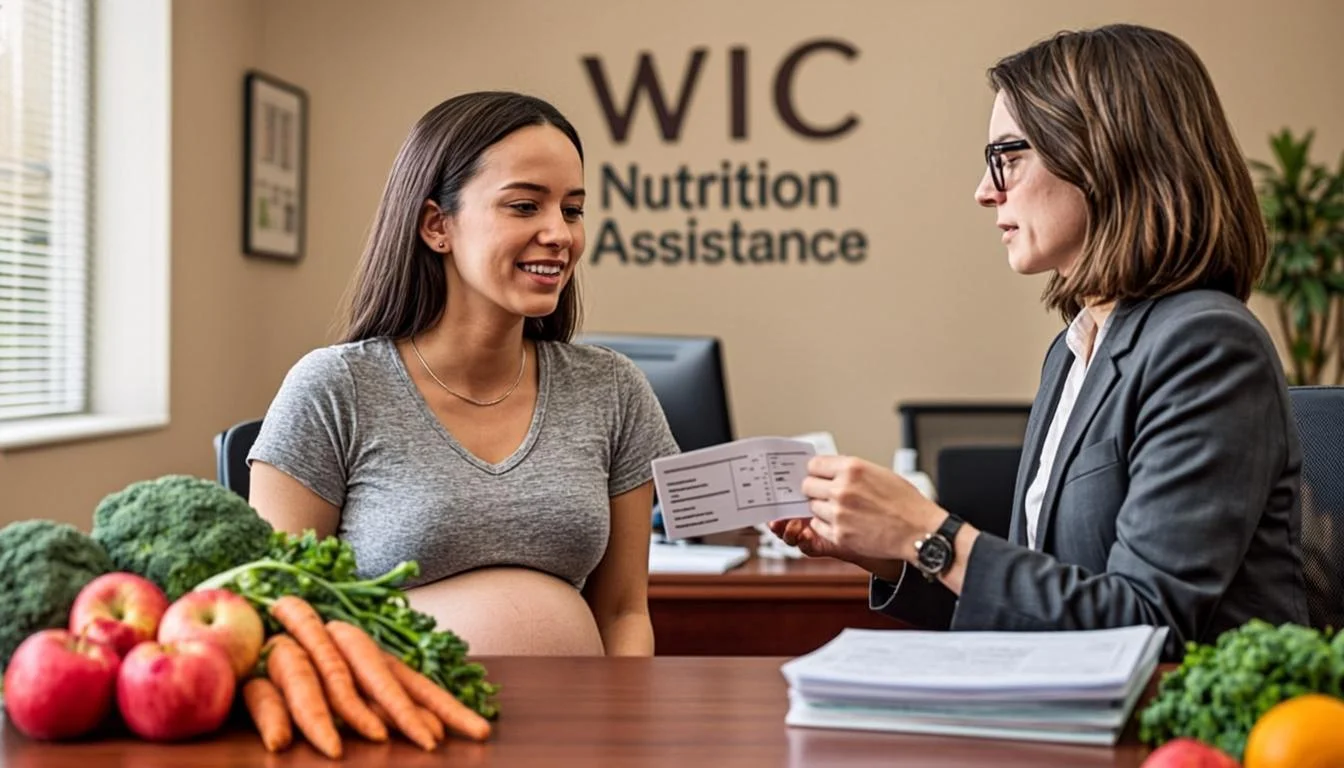
The Special Supplemental Nutrition Program for Women, Infants, and Children, known as WIC, is one of the most accessible nutrition programs for undocumented families. WIC does not have the same immigration restrictions as SNAP, and it is available to pregnant women, new mothers, and children under five who meet income requirements. There is no waiting period, no qualified alien requirement, and no five-year bar.
WIC provides food vouchers, breastfeeding support, nutrition counseling, and referrals to healthcare services. The food packages include items like milk, eggs, cheese, whole grains, fruits and vegetables, and infant formula. The program is designed to support the nutritional needs of pregnant women and young children during critical developmental years, and the benefit amounts can be substantial, especially for families with infants who need formula.
Our page on how SNAP and WIC work together explains how families can receive both programs at the same time. WIC is administered through local health departments and community health centers, and the application process is straightforward. You will need proof of income, proof of pregnancy if applicable, and identification for yourself and your children. You do not need to provide immigration documents, and the WIC office cannot share your information with immigration enforcement.
School Meal Programs for Immigrant Families
Children in undocumented families can access free or reduced-price meals at school through the National School Lunch Program and the School Breakfast Program. These programs are available to all children regardless of immigration status, and eligibility is based on household income. Children in families receiving SNAP benefits are automatically eligible for free school meals, but you can also apply directly through your school district.
The application for school meals is separate from the SNAP application, and it does not ask about immigration status. You only need to provide income information and the names of the children. Many school districts also offer summer meal programs that provide free meals to children under 18 when school is not in session. The Summer EBT and Sun Bucks program provides additional food benefits during the summer months for families with school-age children.
If you have children in school, contact your school's front office or cafeteria manager to ask about meal programs. They can help you fill out the application and explain what documentation you need. School meals are a critical source of nutrition for children in immigrant families, and the programs are designed to be accessible to everyone regardless of status.
Emergency Medicaid and Other Safety Net Programs
Beyond food assistance, undocumented families may qualify for certain emergency services. Emergency Medicaid covers emergency medical care, including labor and delivery for pregnant women, regardless of immigration status. This is not a food program, but it is part of the safety net that exists for families without lawful status, and many families who use Emergency Medicaid also qualify for other services.
Community health centers provide primary care on a sliding scale based on income, and they do not ask about immigration status. Many of these centers also have social workers on staff who can help families connect with food assistance programs, WIC, and local food banks. If your family needs healthcare and food, a community health center is often the best first point of contact.
Local food banks and food pantries are available to everyone regardless of immigration status or income. These organizations distribute free food to families in need, and they typically do not require any documentation beyond a signed statement of need. Feeding America operates a network of food banks across the country, and you can find a local food bank by visiting their website or calling the USDA National Hunger Hotline at 1-866-3-HUNGRY.

Public Charge: Why Fear Stops Families from Applying
The public charge rule has created more fear in immigrant communities than almost any other policy. The rule allows the federal government to deny green card applications to immigrants who are deemed likely to become primarily dependent on government assistance. For years, this rule was interpreted broadly, and families avoided all public benefits out of fear that using them would ruin their immigration chances.
The current rule, which took effect in 2022 and remains in effect in 2026, does not count SNAP, Medicaid, or housing assistance against any applicant. The rule specifically excludes benefits received by children, which means even if your citizen children receive SNAP, it cannot be held against you in a future immigration application. Our page on the public charge rule and SNAP explains the current policy in detail, including what benefits are excluded and how the rule is actually applied.
Despite the current rule, fear persists in many communities. This fear is understandable given the history of immigration policy changes, but it is causing real harm. Families are going hungry because they are afraid to apply for benefits their children are legally entitled to receive. If you are unsure whether applying will affect your immigration case, talk to an immigration attorney or a Board of Immigration Appeals accredited representative before you apply. Do not rely on rumors or advice from friends, because the rules are specific and they have changed multiple times.
Privacy Protections at the SNAP Office
Federal law protects the privacy of everyone who applies for SNAP, regardless of immigration status. The SNAP office cannot share your information with Immigration and Customs Enforcement, Customs and Border Protection, or any other immigration enforcement agency. This protection comes from the 1996 welfare reform law itself, which includes a confidentiality provision that was specifically designed to encourage eligible families to apply without fear.
When you apply for SNAP on behalf of your citizen children, you will be asked for a Social Security number. You do not have to provide your own number if you do not have one or if you do not want to. You only need to provide Social Security numbers for the household members who are applying for benefits, which in a mixed-status household means your citizen children. The SNAP office may ask about your immigration status, but you are not required to answer, and they cannot deny your children's application based on your refusal.
The verification documents you need to bring include proof of identity for yourself, such as a driver's license or consular ID, proof of identity and citizenship for your children, such as birth certificates, proof of address, and proof of income. The verification documents checklist on our site lists everything you need and explains what to do if you are missing a document.
How to Apply for Your Citizen Children Without Risk
The application process for mixed-status households is straightforward, but it helps to be prepared. Start by gathering the documents you need, including birth certificates for your children, proof of income, proof of address, and identification for yourself. You do not need to provide immigration documents, and you should not provide any false documents or false Social Security numbers under any circumstances.
Most states allow you to apply online through a state portal, by mail, or in person at a local social services office. When you fill out the application, list all household members, but mark the undocumented members as ineligible non-citizens. This tells the SNAP office to exclude them from the benefit calculation. The application will ask about income, housing costs, childcare expenses, and other deductions that can affect the benefit amount.
After you submit the application, you will have an interview with a SNAP caseworker. This interview can usually be done by phone, and it typically takes 20 to 30 minutes. The caseworker will ask about your household situation and verify the information on your application. If you are unsure how to answer a question, you can ask for clarification or request to speak with a supervisor. You have the right to an interpreter if you need one, and the service is free.
If your application is approved, you will receive an EBT card in the mail within 7 to 10 days. The card works like a debit card and can be used at any store that accepts SNAP. The benefits are loaded onto the card each month on a schedule determined by your state. If your application is denied, you have the right to appeal the decision, and our page on how to appeal a SNAP denial walks through that process.
What to Do if Your Family Faces Food Insecurity
If your family is hungry and you do not know where to turn, there are several steps you can take right away. The fastest option is to contact a local food bank or food pantry. Feeding America operates a network of more than 200 food banks across the country, and they distribute food to anyone in need without asking about immigration status or income. You can find a local food bank by calling the USDA National Hunger Hotline at 1-866-3-HUNGRY or by visiting the Feeding America website.
If you have children under five or you are pregnant, apply for WIC immediately. WIC is available regardless of immigration status, and the application process is fast. You can usually get an appointment within a few days, and the benefits start as soon as you are approved. WIC offices are located in health departments, community health centers, and some hospitals.
If you have school-age children, contact your school to enroll them in free or reduced-price meal programs. The application is simple, and the meals are available immediately once approved. Many schools also offer after-school snacks and summer meal programs that can help fill the gap when school is not in session.
Finally, if you have U.S.-citizen children in your household, apply for SNAP on their behalf. This is the most substantial food assistance program available, and the benefits can be several hundred dollars per month depending on your household size and income. Do not let fear stop you from accessing benefits your children are legally entitled to receive. The privacy protections are strong, the public charge rule does not count SNAP, and the benefits can make a real difference in your family's daily life.
Frequently Asked Questions
Can undocumented immigrants get SNAP benefits?
No. Federal SNAP requires applicants to be U.S. citizens or have qualified alien status. Undocumented immigrants do not meet this requirement and cannot receive federal SNAP benefits under any circumstances, even if they have lived in the United States for decades.
Can I apply for SNAP for my U.S.-born children if I am undocumented?
Yes. U.S.-citizen children in mixed-status households are eligible for SNAP regardless of their parents' immigration status. The parent can apply on behalf of the children without disclosing their own status, and only the children's income and household information is considered.
Will applying for SNAP affect my immigration case or green card application?
No. The 2022 public charge rule, which remains in effect in 2026, does not count SNAP against any applicant. Even if the rule changes in the future, applications made on behalf of citizen children are not attributed to the parents for public charge purposes.
Which states offer food assistance to undocumented immigrants?
California, New York, Illinois, Minnesota, Washington, Connecticut, Colorado, Maine, and the District of Columbia operate state-funded food assistance programs that mirror SNAP benefits for immigrants who do not qualify for federal benefits. Eligibility and benefit amounts vary by state.
Can undocumented families get WIC benefits?
Yes. WIC, the Special Supplemental Nutrition Program for Women, Infants, and Children, is available regardless of immigration status. Pregnant women, new mothers, and children under five who meet income requirements can receive WIC benefits, which include food vouchers and nutrition counseling.
Does the SNAP office share my information with ICE or immigration enforcement?
No. Federal law prohibits SNAP offices from sharing applicant information with immigration enforcement agencies. The 1996 welfare reform law includes a confidentiality provision that protects all applicants, regardless of status, when they apply on behalf of eligible household members.
What should I do if my family is hungry but I am afraid to apply?
Contact a local food bank, community action agency, or immigrant rights organization. These groups can help you understand what programs your family qualifies for, assist with the application process, and connect you with legal resources if needed. You can also call the USDA National Hunger Hotline at 1-866-3-HUNGRY for free, confidential assistance.