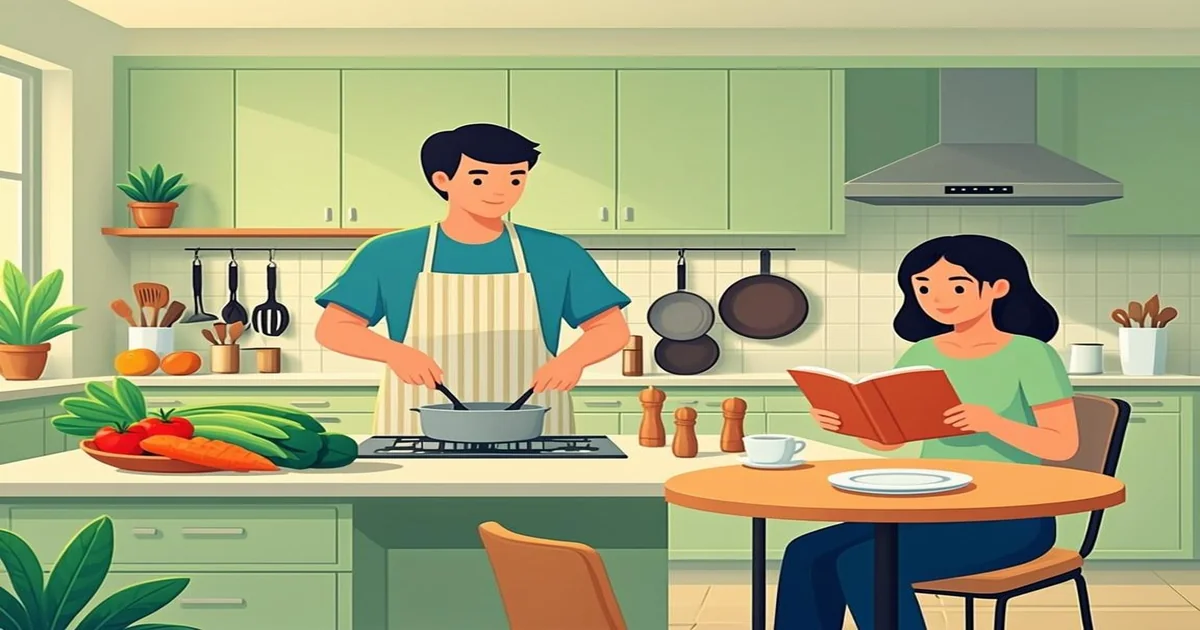
Most adults who share rent assume they have to apply for food stamps together. That assumption costs thousands of households money every month, because the SNAP program does not work the way most people think it does. A "household" for SNAP purposes has almost nothing to do with a lease, a utility bill, or whose name is on the apartment door.
The actual test is whether the people living together buy food together and prepare meals together. Two roommates who keep their groceries on separate shelves and cook their own dinners are two separate SNAP households, even if they split rent down the middle. Two siblings who share a pot of soup every night are one household, even if they have separate bedrooms and separate bank accounts.
This guide walks through the federal rules, the most common living situations, and the small documentation details that decide whether you file alone or together. It applies the same way whether you live in a four-bedroom house with three friends or a studio apartment with a partner.
If you want a quick estimate first, you can run the free SNAP eligibility calculator on the homepage with just your own income and expenses to see what a separate household filing might look like.
Table of Contents
- 1What SNAP Actually Means by "Household"
- 2The Buy-and-Prepare Test: The One Question That Decides Everything
- 3✅ Yes, we buy and prepare food together
- 4✅ No, we buy and prepare food separately
- 5⚠️ Sometimes, but not always
- 6Living Arrangements: A Quick Reference
- 7Mandatory Household Combinations: When SNAP Forces You Together
- 81. Spouses Who Live Together
- 92. Parents and Children Under 22
- 103. Parents and Children Under 18
- 114. Authorized Representatives and Care Facilities
- 12When Roommates Can Apply Separately
- 13What Income Counts for Each Household
- 14How to Apply as Separate Households: A Step-by-Step Guide
- 15Common Mistakes That Cost Roommates Benefits
- 16❌ Listing the roommate's income on your application
- 17❌ Claiming the full rent instead of your share
- 18❌ Sharing EBT cards or PINs
- 19❌ Failing to document separate food storage
- 20Special Situations to Know About
- 21Joint Custody of Children
- 22Living With a Landlord
- 23Moving to a New State
- 24Self-Employment Income
- 25Living in a Shelter or Transitional Housing
- 26Documentation Checklist for Separate Household Applications
- 27What to Bring to Your SNAP Interview
- 28How Being a Separate Household Affects Your Benefit Amount
- 29Frequently Asked Questions
- 30Why These Rules Exist
What SNAP Actually Means by "Household"
The word "household" in everyday speech refers to everyone living under one roof. SNAP uses the word differently. Under the Food and Nutrition Act, a SNAP household is the group of people who customarily purchase food together and prepare meals together.
The technical phrase in the regulations is "a person or group of persons who customarily purchase food in common and prepare meals together at home."
That single sentence is the foundation of every household decision a caseworker makes. Living together is necessary but not sufficient. Sharing rent is necessary but not sufficient. The decisive question is about food: who shops for it, who pays for it, and who cooks it. Everything else flows from that answer.
The rule is codified at 7 CFR 273.1(a) and applies in every state, with a few exceptions we will get to shortly. Some states have small variations in how they document the buy-and-prepare test, but the underlying definition is federal.
This is why two college students sharing an off-campus apartment can sometimes apply separately even though a caseworker in the same office might combine two unrelated adults who share a kitchen.
The Buy-and-Prepare Test: The One Question That Decides Everything
When you apply for SNAP, the caseworker will ask some version of this question: "Do you and the other people in your home buy food together and prepare meals together?" The answer to that question determines your household composition. There is no second test that overrides it, no income threshold that changes it, and no asset rule that affects it.
Here is what each answer means in practice.
✅ Yes, we buy and prepare food together
You are one SNAP household. Everyone in the group must be listed on the same application. Everyone's income and deductions are pooled. You receive one benefit amount for the whole group, issued on one EBT card (or however many you request within the household).
✅ No, we buy and prepare food separately
You are separate SNAP households. Each person files their own application with their own income. Each person gets their own benefit and their own EBT card. The fact that you split rent, share a kitchen, or even share a refrigerator does not by itself make you one household.
⚠️ Sometimes, but not always
Sharing a few meals a week does not automatically make you one household, but sharing most meals usually does. Caseworkers look at the pattern. If you split grocery bills, cook for each other on most days, or eat from a common stock of food, you will likely be treated as one household.
The buy-and-prepare test is not a trick. It is the most important question on the application, and it is the one most applicants answer incorrectly because they assume the program expects them to combine. If the truthful answer is "we cook separately," say so. Documenting that fact is straightforward, and the payoff can be hundreds of dollars a month.
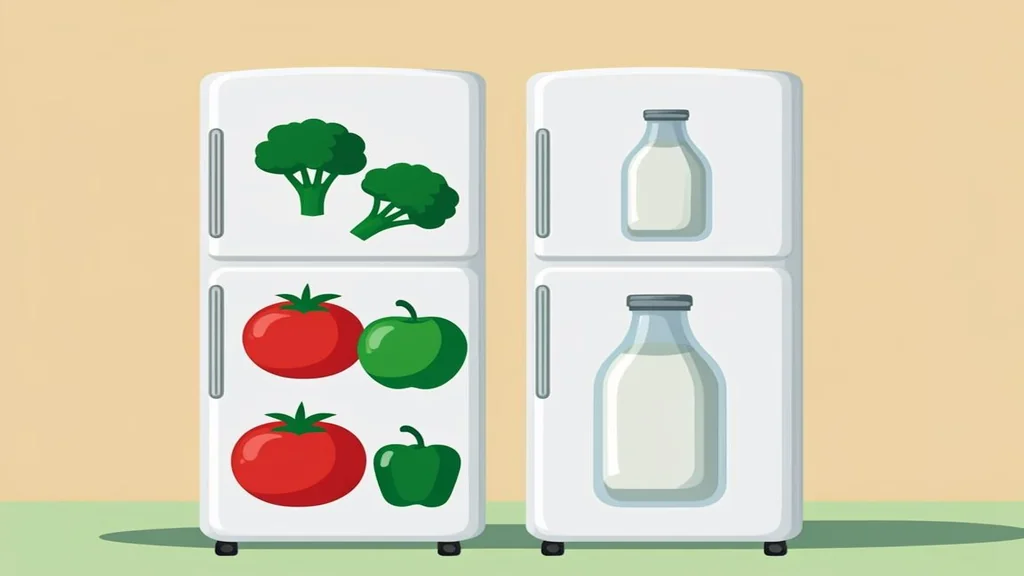
Separate food storage is the strongest visual evidence of separate SNAP households.
Living Arrangements: A Quick Reference
Before we go deeper, here is a quick map of the most common situations. The cards below show whether the people in each scenario must apply together or can apply separately.
Two unrelated adult roommates
Each buys own groceries and cooks own meals. Each applies separately with own income.
Three friends sharing a house
If each handles their own food, all three can file separate applications. Splitting rent does not combine them.
Spouses living together
Married couples must apply as one household, no matter how food is handled.
Parents with child under 22
Children under 22 living with a parent must be in the same household as the parent.
Adult child (22+) living with parents
If the adult child buys and prepares food separately, they can file their own application.
Unmarried partner
If not legally married and food is separate, you can apply separately. Joint custody situations have their own rules.
Roommates who share groceries
Even if unrelated, sharing food purchases and meals makes you one SNAP household.
Boarder renting a room
If you pay a set amount for meals, you are usually a boarder and not part of the host household for SNAP.
Mandatory Household Combinations: When SNAP Forces You Together
The buy-and-prepare test has a few hard exceptions. SNAP requires certain groups to apply together even if they handle food separately. These exceptions are not negotiable, and caseworkers apply them automatically.
1. Spouses Who Live Together
Married couples living in the same home must be one SNAP household. It does not matter if you keep separate bank accounts, cook separate meals, or even sleep in separate bedrooms. As long as you are legally married and sharing a residence, you file one application together.
Domestic partnerships and civil unions are treated differently depending on the state. Some states treat them the same as marriage for SNAP purposes, others do not. If you are in a registered domestic partnership, check with your local office to see how your state handles it.
2. Parents and Children Under 22
A child under age 22 living with a parent must be in the same SNAP household as that parent. This applies even if the child is a legal adult, even if the child works full time, even if the child pays rent to the parent, and even if they prepare food separately. The rule is purely age-based until 22.
This rule surprises many families. An 18-year-old with a full-time job who lives at home and buys their own groceries still must be included on the parents' application.
The same is true for a 20-year-old college student living at home, even though college students face their own separate eligibility rules. Once the child turns 22, they can apply as a separate household if the food-handling test is met.
3. Parents and Children Under 18
Naturally, children under 18 living with a parent are part of the same household. This is the most common SNAP household configuration: one or two parents with dependent children.
4. Authorized Representatives and Care Facilities
Residents of certain group living situations, including some assisted living facilities and substance abuse treatment centers, are treated as a single household by the facility. This is rare for working-age adults but common for older adults in care. Our guide to SNAP for seniors covers these situations in more detail.
When Roommates Can Apply Separately
Now the more common situation: two, three, or four adults sharing an apartment or house, none of whom are married to each other and none of whom are parents of children under 22 in the home. In this case, the default is separate households, and each person can apply on their own.
To qualify for separate household status, each person must genuinely handle their own food. That means buying their own groceries, storing food separately (a separate shelf in the refrigerator and pantry is usually enough), and preparing their own meals.
You can still share cooking equipment, share the kitchen at different times, and even eat at the same table. What matters is that the food itself is separately purchased and prepared.
Splitting the grocery bill is the most common reason roommates get combined into one household against their wishes.
If you take turns buying food for the group, reimburse each other for shared ingredients, or cook dinner for everyone a few nights a week, the caseworker will likely treat you as one household. This is true even if the shared meals are just a convenience and the bulk of your food is separate.
For single parents who live with another adult, the rules are the same. A single mother sharing an apartment with a friend can apply separately from that friend as long as food is handled separately. The friend's income does not count toward the mother's eligibility, and the friend is not included in the household size for benefit calculation.
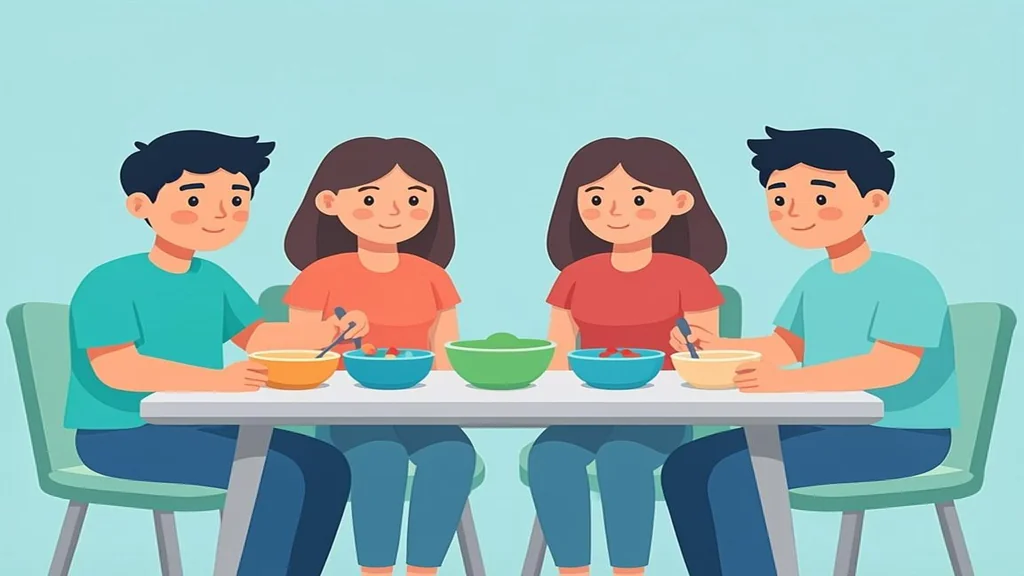
Each person handling their own plate is the visual cue caseworkers look for.
What Income Counts for Each Household
Once you know who is in your SNAP household, you list only that household's income. A roommate who is not part of your SNAP household does not list their income on your application, and their income is not counted against you. This is true even if they pay you rent, even if they occasionally buy shared household supplies, and even if they contribute to utilities.
What counts as income for SNAP is broader than just wages. It includes earned income from a job, unearned income like Social Security or unemployment benefits, and certain other sources.
Self-employment income is net income after business expenses. The distinction between gross and net income matters because SNAP applies the gross income test first, then deducts allowed expenses to arrive at net income.
The deductions you can claim are also household-specific. If you file as a separate household of one, you claim only your own rent, your own utilities, your own childcare costs, and your own medical expenses (if you are 60 or older or disabled).
Your roommate's expenses do not help you, and your expenses do not help them. The SNAP deductions cheat sheet walks through all seven deductions in detail.
One common point of confusion: shared rent. If you and a roommate split rent equally, you list only your share as your housing cost. If your share is $600 of a $1,200 rent, you list $600.
You do not list the full $1,200, and your roommate does not either. The same rule applies to shared utilities. Documenting your actual share is important because the shelter deduction is one of the largest available.
How to Apply as Separate Households: A Step-by-Step Guide
If you have decided that you and your roommate qualify as separate households, the application process is the same as any other SNAP application. Each person files their own. Here is what to expect.
Be honest with yourself about how food is handled in your home. If you genuinely purchase and prepare food separately, you qualify. If you sometimes cook for each other or split grocery runs, talk to a caseworker about your specific situation before assuming you qualify.
You will need your own ID, your own proof of income (pay stubs, benefit letters, or bank statements), your own lease or a written statement of your rent share, and your own utility bills. If you are claiming deductions, gather documentation for childcare, medical expenses, or other allowable costs.
You can apply online through your state's SNAP portal, in person at a local office, by mail, or by fax. Each roommate files a separate application with their own information. You can use the SNAP application guide for step-by-step instructions on the application itself.
List yourself and any household members who must be included (spouse, children under 22). Do not list your roommate unless they are required to be included. There is usually a question about who else lives in the home; answer it truthfully, but make clear that you handle food separately.
You will have a phone or in-person interview with a caseworker. They may ask about how food is handled in your home. Describe your routine plainly. The SNAP interview guide covers the most common questions and how to answer them.
If you are approved as a separate household, maintain the pattern you described in the application. Mixing food purchases later can cause problems at recertification. Keep separate shelves, separate grocery receipts, and a clear pattern of separate meal preparation.
If your situation changes (income goes up or down, someone moves in or out, you marry your roommate), report it within the timeframe your state requires. The penalties for unreported changes can be serious, so update your case promptly when life changes.
Common Mistakes That Cost Roommates Benefits
Even when roommates qualify for separate households, simple mistakes on the application can lead to denials or reduced benefits. Here are the most common ones.
❌ Listing the roommate's income on your application
The SNAP form asks about everyone in the home. Applicants often list every adult's income, assuming the form requires it. If your roommate is not part of your SNAP household, their income does not belong on your form. Answer the household composition question accurately and the form will guide you correctly.
❌ Claiming the full rent instead of your share
If you split $1,500 rent equally with two roommates, your housing cost is $500. Claiming $1,500 will not help you because the shelter deduction caps at a maximum amount anyway. Claiming the wrong number causes processing delays and can look like fraud.
❌ Sharing EBT cards or PINs
Each separate household gets its own EBT card. Even if you and your roommate trust each other completely, sharing cards or PINs violates program rules. If you want to buy groceries together, pay separately at the register.
❌ Failing to document separate food storage
If the caseworker asks for proof, be ready to show separate grocery receipts, separate food storage, or a simple written statement from your roommate confirming you handle food separately. Verbal claims are usually enough, but having backup prevents delays.
Special Situations to Know About
Joint Custody of Children
Separated parents who share custody of a child cannot both include the child in their SNAP household. The child is counted in the household of the parent who provides more than 50% of the child's meals. The rules for joint custody shared households are detailed and worth reading carefully if this applies to you.
Living With a Landlord
If you rent a room from a homeowner and live in their house, you are not automatically part of their SNAP household. If you pay for your own food, you are a separate household. If you pay a flat amount that includes meals, you may be classified as a boarder, which has its own rules.
Moving to a New State
SNAP household rules are federal, but benefit amounts and application procedures vary by state. If you are moving to a new state, you will need to close your old case and apply in the new state. You cannot receive benefits from two states in the same month.
Self-Employment Income
If you are self-employed or a gig worker, your net business income counts toward your household's eligibility. If you have a roommate who is also self-employed and you file separately, only your own business income is on your application.
Living in a Shelter or Transitional Housing
People experiencing homelessness or living in shelters have special rules that often allow them to apply as a household of one regardless of who else is at the shelter. The guide to SNAP for homeless individuals covers this in depth.
Documentation Checklist for Separate Household Applications
What to Bring to Your SNAP Interview
- A government-issued photo ID for yourself
- Social Security number for everyone in your SNAP household
- Proof of your income (pay stubs from the last 30 days, benefit award letters, or bank statements)
- Your lease or a written statement of your share of rent
- Utility bills in your name or your share of shared utilities
- Childcare cost receipts if you pay for care so you can work
- Medical expense receipts if you are 60 or older or disabled
- A brief written statement from your roommate confirming you handle food separately (helpful but not always required)
- Separate grocery receipts showing you buy your own food (helpful if asked)
How Being a Separate Household Affects Your Benefit Amount
SNAP benefits are calculated based on household size, net income, and the maximum monthly allotment for that size. A household of one has a lower maximum allotment than a household of two, but a household of one also has lower income thresholds and lower deductions needs. The trade-off usually works in favor of separate households when incomes are unequal.
Consider two roommates each earning $2,000 a month. As a combined household of two, they would have $4,000 in countable income, well above the gross income limit for a two-person household in most states.
As separate households, each has $2,000 in income, which is well within the limit for a one-person household. Both would likely qualify, and each would receive their own benefit. The combined total is often more than what they would get as a single household.
The actual benefit calculation is more complex because of deductions, but the principle holds: separate households with separate moderate incomes usually fare better than a combined household with a higher total income. You can use the current SNAP income limits and the homepage calculator to estimate how this works in your situation.
Frequently Asked Questions
Why These Rules Exist
The buy-and-prepare test was written into federal law in the late 1970s, when Congress was rewriting the food stamp program to focus on the household as an economic unit rather than a residential one.
The earlier rules had tied eligibility to physical residence, which meant unrelated adults sharing an apartment were forced to combine their incomes even when they had no economic relationship. The result was unfair denials for low-income workers living with higher-income roommates.
The current rule treats the household as a group of people who actually share food resources. That definition better reflects how people actually live, especially in high-cost cities where shared housing is the norm. The rule also protects the program from fraud, because combining incomes only happens when there is a genuine economic relationship, not just a shared address.
For the millions of working adults who live with roommates, partners, or extended family, the buy-and-prepare test is one of the most important rules in the entire SNAP program. Understanding it can mean the difference between a denied application and several hundred dollars a month in food assistance.