
Child care is one of the largest expenses a working family faces, often eclipsing rent in many states. The Supplemental Nutrition Assistance Program recognizes this reality through the dependent care deduction, a rule that lets households subtract qualifying child care costs from their gross income before benefits are calculated. For families paying $800, $1,200, or even $1,800 a month for daycare, this single deduction can mean the difference between a $200 monthly SNAP benefit and a $600 benefit. Understanding how the deduction works, what costs qualify, and how to document them is essential for any parent applying for food assistance.
This guide walks through the dependent care deduction line by line. We cover which family members trigger the deduction, which expenses count, how the math flows through the gross versus net income calculation, and how to make sure your caseworker does not overlook a single dollar. We also address common misconceptions, such as the belief that only licensed daycare qualifies or that informal care from a relative cannot be deducted. Both assumptions are wrong, and both can cost families hundreds of dollars a year in lost food benefits.
Key takeaway: The SNAP child care deduction is an uncapped deduction. Unlike the standard deduction or the earned income deduction, there is no maximum limit. You can deduct the full amount you pay for qualifying care, dollar for dollar, as long as you can document it.
Table of Contents
- 1What Is the SNAP Dependent Care Deduction
- 2Who Qualifies for the Deduction
- 3Which Child Care Expenses Count
- 4Licensed Daycare and Preschool
- 5Informal and Relative Care
- 6Before-School and After-School Programs
- 7Transportation to and from Care
- 8Care for Incapacitated Adults
- 9How the Deduction Lowers Your Net Income
- 10How to Document Child Care Expenses for SNAP
- 11For Licensed Daycare
- 12For Informal or Relative Care
- 13For After-School and Summer Programs
- 14For Adult Day Programs
- 15State-by-State Variations
- 16Mistakes That Cost Families Money
- 17How the Deduction Interacts With Other SNAP Rules
- 18How to Apply With the Deduction in Mind
- 19Frequently Asked Questions
- 20Can I deduct child care if the caregiver is a family member?
- 21Is there a maximum amount I can deduct for child care?
- 22What if I receive a child care subsidy from the state?
- 23Do summer camps and after-school programs count?
- 24Can I deduct care for my elderly parent who lives with me?
- 25Does the deduction apply if I am self-employed?
- 26What happens if I forget to claim the deduction during my application?
What Is the SNAP Dependent Care Deduction
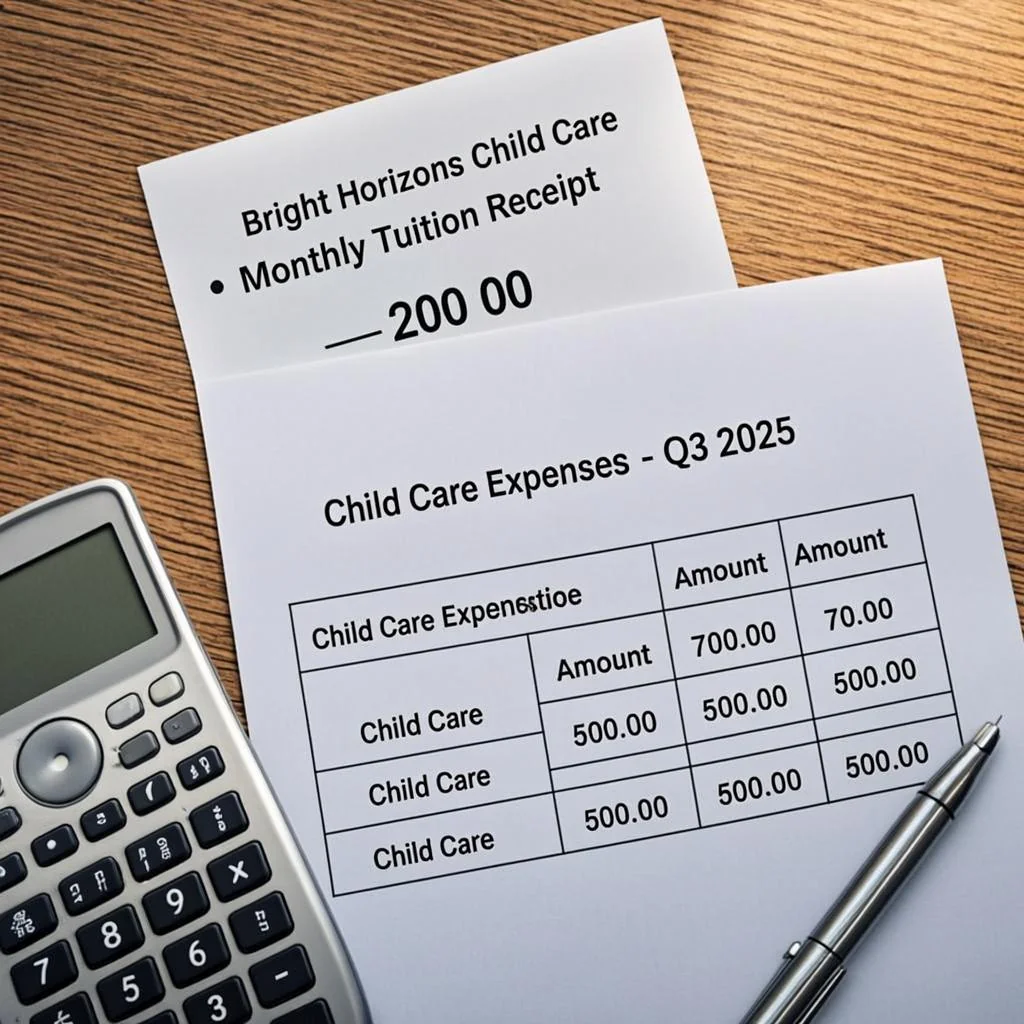
The dependent care deduction is one of several allowable expenses that SNAP lets households subtract from their gross income to arrive at their net income. Net income, not gross income, is what determines both eligibility and the final benefit amount. The lower your net income, the higher your SNAP benefit. The deduction applies when a household member needs care so that another household member can work, look for work, attend training, or attend school.
Despite the name, the deduction is not limited to child care. It also covers care for incapacitated adults in the household. A mother who pays an aide to help her disabled father so she can keep her job qualifies for the same deduction as a mother paying for infant daycare. The rule treats both situations identically because the underlying logic is the same: the care expense is necessary for the household to earn income, and that expense should not count against the household when food assistance is calculated.
For most households, the deduction flows through the net income calculation in a specific order. SNAP first applies the standard deduction, then a 20 percent earned income deduction, then any dependent care expenses, then child support payments, then medical expenses over $35 for elderly or disabled members, and finally excess shelter costs. The order matters because each deduction reduces the income base that the next deduction works against. Understanding this sequence helps explain why two families with similar incomes can end up with very different SNAP benefit amounts.
Who Qualifies for the Deduction
To claim the dependent care deduction, the household must include a dependent who needs care. The dependent can be a child under 18, a person of any age who is physically or mentally incapacitated, or an adult who cannot care for themselves. The person providing the care can be inside or outside the household, but if the caregiver lives in the household, their payment must come from a source outside the household for the deduction to apply.
The household must also have a reason for the care. The four qualifying reasons are work, job search, training or education that prepares a household member for employment, and attendance at school. A single mother paying for after-school care so she can attend nursing school qualifies. A grandfather paying for daytime care for his disabled wife so he can keep his job at the post office qualifies. A family paying for evening care so both parents can work second shift qualifies.
Common mistake: Many families assume that if they receive a child care subsidy, they cannot also claim the SNAP deduction. In fact, the SNAP rule lets you deduct the out-of-pocket portion you pay after the subsidy. If daycare costs $1,400 a month and the state subsidy covers $900, you can deduct the remaining $500 you pay yourself. Always bring proof of both the subsidy and your co-pay to the SNAP interview.
Which Child Care Expenses Count
The SNAP rules are broader than most families expect. The key question is not whether the provider is licensed, but whether the care was necessary for the household member to work, train, or attend school. Below are the most common qualifying expenses, organized by category.
Licensed Daycare and Preschool
Costs paid to a licensed daycare center, in-home daycare provider, preschool, or after-school program all qualify. This includes registration fees, late-pickup fees, and activity fees that the program charges as part of its standard operation. Keep every receipt and every quarterly statement the center issues, because caseworkers often ask for the most recent three months of records.
Informal and Relative Care

Care provided by a relative, neighbor, or friend can qualify as long as the arrangement is structured like a real caregiving relationship. This means a regular schedule, an agreed-upon payment, and care that actually occurs. If your mother watches your two children every weekday from 7:00 a.m. to 4:00 p.m. so you can work, and you pay her $400 a month, that payment counts as a deductible child care expense. The caregiver does not need to be licensed, but you should have a simple written agreement and a record of payments, such as cancelled checks, Venmo receipts, or a signed log.
Before-School and After-School Programs

Programs operated by the school district, the YMCA, or a private provider that cover the gap between school hours and parent work hours qualify. This includes programs that operate only on teacher in-service days, school holidays, and summer break. If your child attends a program that runs from 3:00 p.m. to 6:00 p.m. each school day, the monthly fee is deductible. The same applies to summer day camps that provide care while you work, though overnight camps do not qualify.
Transportation to and from Care
If the care provider charges a transportation fee to pick up or drop off your child, that fee is part of the deductible expense. This is common with in-home daycares that bus children to and from school. Plain mileage costs for driving your own child to daycare do not qualify as a separate deduction, because transportation is covered under the excess shelter deduction indirectly through the standard utility allowance.
Care for Incapacitated Adults
If a household member is physically or mentally unable to care for themselves and another household member must work, the cost of an in-home aide, adult day program, or other supervised care qualifies. This deduction is frequently missed because families do not realize it applies. A daughter who pays $300 a month for an adult day program so she can keep her job while caring for her mother with dementia can and should claim this expense.
How the Deduction Lowers Your Net Income
The SNAP benefit formula uses net income, not gross income, to determine the final monthly benefit. The formula subtracts 30 percent of net income from the maximum monthly allotment for the household size. Every dollar deducted from gross income reduces net income by one dollar, which in turn increases the SNAP benefit by 30 cents. This means a $500 monthly child care deduction translates to roughly $150 more in monthly SNAP benefits.
Here is the actual calculation flow for a hypothetical household. Consider a single mother with two children in Ohio. She earns $2,800 a month as a medical assistant. She pays $950 a month for daycare so she can work. Her rent is $1,150, and her utilities average $280 a month. Without the child care deduction, her net income would be higher and her SNAP benefit lower. With the deduction, the math works out as shown below.
Sample calculation (Ohio, household of 3, 2026)
- Gross monthly income: $2,800
- Standard deduction: −$215 (federal standard for household of 3)
- Earned income deduction (20%): −$560
- Dependent care deduction: −$950
- Excess shelter deduction: −$890 (rent $1,150 + utilities $280 − half of post-deduction income)
- Net SNAP income: approximately $185
- SNAP benefit: $768 (max for 3) − 30% of $185 ($55) = $713/month
Without the dependent care deduction, her net income would be roughly $1,135 and her monthly benefit would drop to around $428. The deduction adds about $285 per month to her benefit.
How to Document Child Care Expenses for SNAP
Caseworkers want to see proof that the expense is real, recurring, and necessary. The level of documentation depends on the type of care and the provider. The more organized your paperwork, the faster your application moves. Bring the following to your SNAP interview or upload them through your state's online portal.
For Licensed Daycare
Bring the most recent three months of receipts or a quarterly statement from the daycare center. The statement should show the child's name, the provider's name and tax ID, the dates of care, and the amount paid. Most centers issue a year-end statement that works perfectly. If you receive a child care subsidy, bring the subsidy award letter showing the total cost and your co-pay amount.
For Informal or Relative Care
Write a simple agreement that includes the caregiver's name, the child's name, the days and hours of care, the payment amount, and the payment schedule. Both you and the caregiver should sign and date it. Attach bank statements, Venmo or Cash App receipts, or cancelled checks showing the payments. A handwritten log with the caregiver's signature confirming each payment also works. Many families miss this deduction simply because they assume informal care does not count, so do not skip this step.
For After-School and Summer Programs
Bring the registration confirmation and the most recent payment receipt. If the program is run by the school district, the school office can print a payment history. For summer camps, the camp director can sign a letter on letterhead stating the dates attended and the total cost. Programs that operate on a sliding scale should provide a letter stating the actual amount you are responsible for.
For Adult Day Programs
Bring the enrollment agreement, the schedule of care, and payment records. If the program is covered partly by Medicaid or a state aging program, bring the letter showing the covered amount and your out-of-pocket share. The same out-of-pocket rule that applies to child care subsidies applies here: only the portion you actually pay can be deducted.
State-by-State Variations
The dependent care deduction is set at the federal level, but states can choose to apply Broad-Based Categorical Eligibility, which raises or eliminates the gross income test for many households. BBCE does not change how the deduction is calculated, but it can extend SNAP eligibility to families whose gross income would otherwise be too high. The deduction itself is honored in all 50 states and the District of Columbia.
Some states have simplified the documentation process through online portals that link directly to child care subsidy records. California, Michigan, New York, and Washington all let caseworkers pull subsidy data directly, which means families receiving a subsidy in those states often do not need to bring separate proof. Check your state's SNAP portal or call your local office to ask whether this integration exists.
If you live in a state with a high standard utility allowance, the child care deduction works together with the shelter deduction to maximize your benefit. The combined effect can be substantial for families in cold-climate states where winter heating costs are high. Run the numbers through our SNAP eligibility calculator to see how the deductions stack up for your specific household.
Mistakes That Cost Families Money
Over the years, the most common mistake we see is families failing to claim informal care. A grandmother who watches her grandchildren so her daughter can work as a nurse is providing real, necessary care. If the daughter pays her mother $300 a month, that payment is deductible. Yet many families do not claim it because they assume SNAP only recognizes licensed providers. This single mistake can cost a family $90 a month in lost benefits, which adds up to more than $1,000 a year.
The second most common mistake is failing to claim after-school and summer care. School-age children need supervision during the gap between school dismissal and the end of the workday. If you pay for any program that provides this supervision, the cost is deductible. The same applies to full-day summer programs. Many parents assume these are optional enrichment, but if the program is necessary for the parent to work, it qualifies.
The third mistake is failing to update the deduction when costs change. If your daycare raises its rate from $850 to $950 a month, you need to report the change at your next SNAP recertification appointment or mid-cycle if your state requires it. Failing to update means your benefit stays lower than it should be. The flip side is also true: if your child ages out of daycare, you must report the change so your benefit is calculated correctly going forward.
Quick checklist before your SNAP interview:
- Three months of daycare receipts or a quarterly statement
- Any subsidy award letter showing your co-pay
- Written agreement for informal care, signed by the caregiver
- Bank or app records showing payments to the caregiver
- After-school and summer program registration and payment history
- Adult day program enrollment letter and payment records, if applicable
How the Deduction Interacts With Other SNAP Rules
The dependent care deduction does not exist in isolation. It sits alongside the earned income deduction, the standard deduction, the medical expense deduction for elderly or disabled members, and the excess shelter deduction. Each one reduces net income, which then increases the SNAP benefit. For families with multiple deductions, the cumulative effect can be substantial.
A household that pays child support can deduct those payments as well. If you pay $400 a month in child support and $700 a month in child care, both are deductible. The same applies to households with an elderly member who has out-of-pocket medical expenses over $35 a month. Each deduction stacks, and there is no cap on the total. The SNAP benefit formula treats every deductible dollar the same way, regardless of which category it falls under.
For families already receiving Temporary Assistance for Needy Families, the dependent care deduction works alongside TANF cash benefits. TANF payments count as unearned income for SNAP purposes, but the dependent care deduction still applies in full. The same is true for families receiving WIC benefits for younger children; WIC does not affect SNAP eligibility or the deduction calculation.
How to Apply With the Deduction in Mind
If you are about to apply for SNAP, gather your child care documentation before you start the application. The application form asks about dependent care expenses, but many families skip the question because they do not realize it applies to them. Fill in every field, even if you are not sure the expense qualifies. Your caseworker will review what you provide and tell you if anything is missing.
If you are already receiving SNAP but did not claim the deduction, you can request a recalculation at any time. Call your caseworker or submit a change report through your state's online portal. The change should be processed within 10 days, and your benefit should increase for the next month. You can also request the change at your next recertification, which typically happens every 6 to 12 months. If you were denied SNAP because your income appeared too high, ask the caseworker to recalculate with the dependent care deduction included; many denials are overturned at the appeal stage when this deduction is properly documented.
For families whose application was already denied because income appeared too high, the dependent care deduction is often the missing piece that flips the decision. The most common denial reasons include income over the limit, missing documentation, and failure to complete the interview. If your denial cited income, recalculate using the deduction and file an appeal if the corrected income falls within the limit.
Frequently Asked Questions
The dependent care deduction generates more questions than almost any other SNAP rule. The answers below address the most common scenarios we hear from families applying for benefits. If your situation is not covered here, contact your local SNAP office or call the customer service number on your approval letter.
Can I deduct child care if the caregiver is a family member?
Yes. Care provided by a grandparent, sibling, aunt, uncle, or other relative qualifies for the deduction as long as the arrangement is regular, necessary for work or training, and documented with a written agreement and payment records. The caregiver does not need to be licensed. Many families miss this deduction because they assume only formal daycare counts, which can cost them hundreds of dollars a year in lost benefits.
Is there a maximum amount I can deduct for child care?
No. The SNAP dependent care deduction is uncapped. You can deduct the full amount you pay for qualifying care, regardless of how high the cost is. This is different from the federal child care tax credit, which has annual limits. SNAP treats every dollar of qualifying child care expense as a dollar-for-dollar reduction in net income, with no ceiling.
What if I receive a child care subsidy from the state?
You can deduct the out-of-pocket portion you pay after the subsidy is applied. If daycare costs $1,400 a month and the state subsidy covers $900, you can deduct the remaining $500 you pay yourself. Bring the subsidy award letter to your SNAP interview showing both the total cost and your co-pay amount, so the caseworker can calculate the deduction correctly.
Do summer camps and after-school programs count?
Yes. Day camps, after-school programs, and before-school programs all qualify as long as the care is necessary for you to work, attend training, or go to school. Overnight camps do not qualify. The registration fee, activity fees, and any transportation fees charged by the program are all part of the deductible expense. Bring the registration confirmation and payment receipts to your interview.
Can I deduct care for my elderly parent who lives with me?
Yes. The dependent care deduction applies to care for incapacitated adults of any age, not just children. If you pay an in-home aide, adult day program, or other supervised care so you can work, the cost is deductible. This deduction is frequently missed because families do not realize it applies to adult care. Document the arrangement the same way you would document child care.
Does the deduction apply if I am self-employed?
Yes. Self-employed households can claim the dependent care deduction in addition to the earned income deduction. Your net self-employment income is reduced by 20 percent automatically under the earned income deduction, and then the dependent care deduction is applied separately. Bring your child care documentation along with your self-employment income records to the interview.
What happens if I forget to claim the deduction during my application?
You can request a recalculation at any time. Call your caseworker or submit a change report through your state's online portal. The change should be processed within 10 days, and your benefit should increase for the following month. If your application was denied because your income appeared too high, ask the caseworker to recalculate with the deduction included. Many denials are overturned at appeal when this deduction is properly documented.
The dependent care deduction is one of the most underused tools in the SNAP program. It rewards work, supports families, and recognizes that child care is not a luxury but a necessity for parents who need to earn a living. If you pay for any form of dependent care, claim it on your application. The paperwork is modest, the math is straightforward, and the monthly benefit increase can be significant. For a working family paying $900 a month for daycare, the deduction can add $270 or more to the monthly SNAP benefit, money that goes directly toward groceries and meals at home.
If you are unsure whether your specific arrangement qualifies, the safest move is to claim it anyway. Your caseworker will tell you if additional documentation is needed. The worst outcome is that the deduction is denied; the best outcome is that your family receives hundreds of dollars more in food assistance each year. Run your numbers through our calculator, gather your receipts, and file your application with the deduction included from day one.