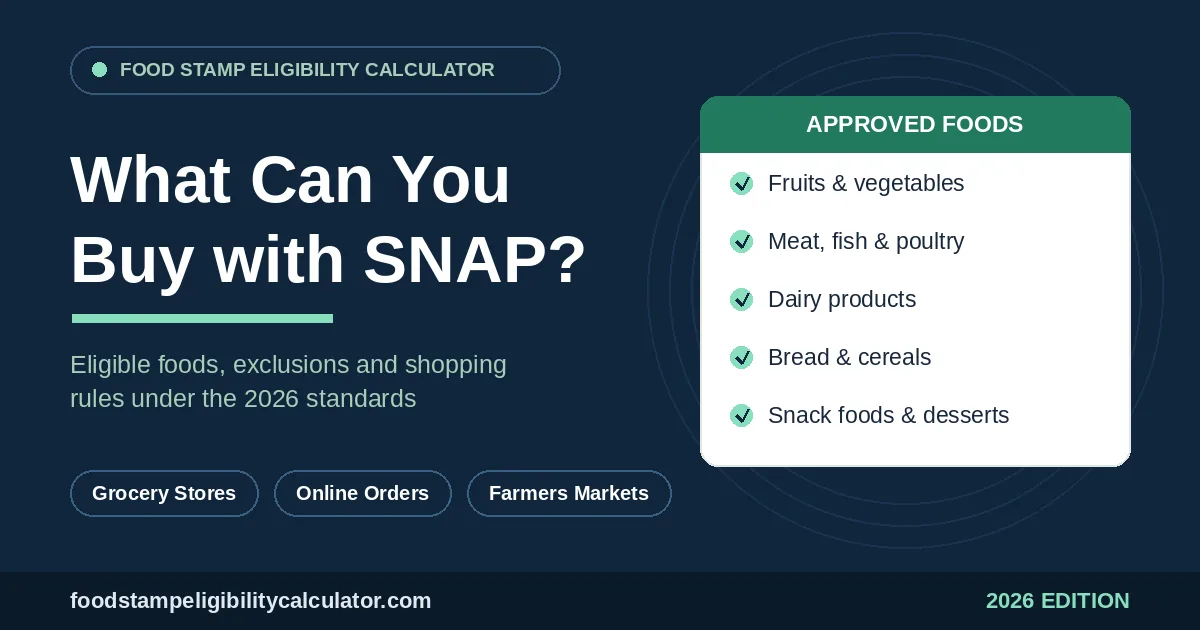
SNAP benefits let you buy most foods meant for home preparation, including fruits, vegetables, meat, dairy, bread, cereal, snacks, and non-alcoholic drinks. You cannot buy hot prepared food, alcohol, tobacco, vitamins, pet food, or household items. The rules come from the USDA's Food and Nutrition Administration and apply at every authorized retailer in all 50 states.
If you just got approved for SNAP and are staring at your EBT card wondering what counts, this guide breaks it down. Every eligible and ineligible category comes with specific examples drawn from real store shelves. We also cover the state restrictions that rolled out across 2026, online EBT shopping, and the surprise items most shoppers miss.
Table of Contents
- 1Foods You Can Buy with SNAP Benefits
- 2Items You Cannot Buy with SNAP Benefits
- 3State-Level SNAP Restrictions in 2026
- 4Prepared Foods: The Hot-and-Cold Line at the Deli
- 5Online Shopping with SNAP Benefits
- 6Double Your Benefits at Farmers Markets
- 7SNAP at Wholesale Clubs
- 8The Restaurant Meals Program
- 9A Print-and-Shop SNAP Grocery List
- 10Tips for Maximizing Your SNAP Grocery Budget
- 11Surprising Items SNAP Covers
- 12Frequently Asked Questions
- 13Related SNAP Guides
Foods You Can Buy with SNAP Benefits
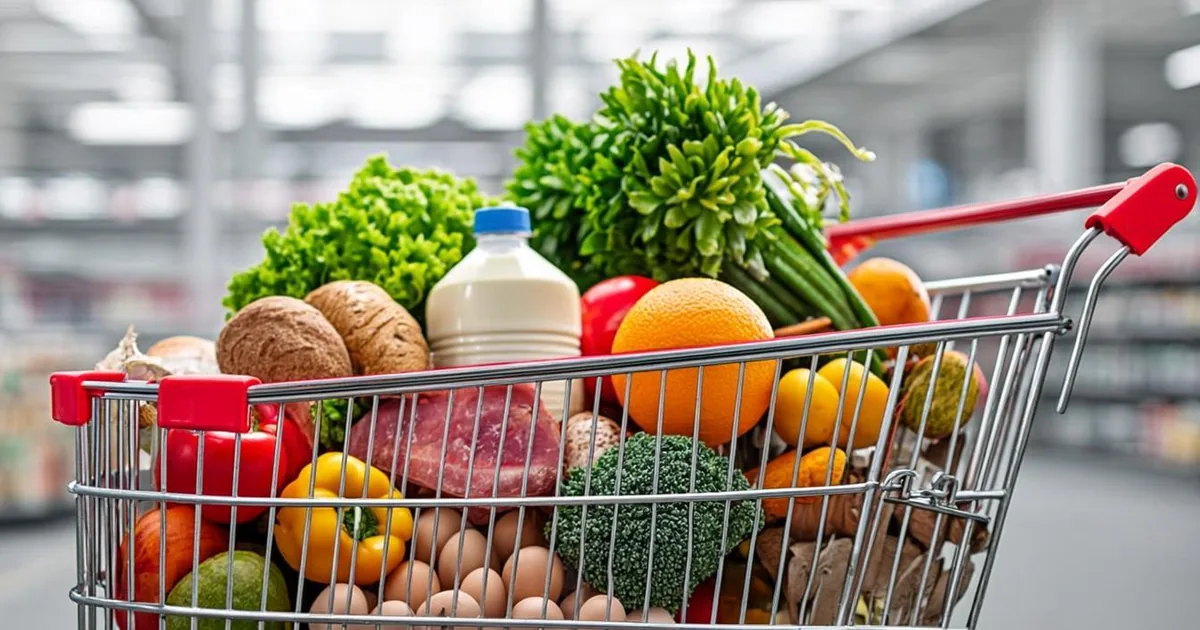
The USDA defines SNAP-eligible food as any food item meant for human consumption that is prepared and eaten at home. This covers a wide range of grocery products across every major food group. The full list is published on the USDA FNA eligible food items page.
| Category | Specific Examples You Can Buy |
|---|---|
| Fruits & Vegetables | Fresh, frozen, canned, and dried fruits and vegetables. Pre-cut melon, bagged salad, frozen broccoli, canned tomatoes, dried raisins |
| Meat, Poultry & Fish | Beef, chicken, pork, turkey, fish, shrimp, bacon, hot dogs, deli meats, whole rotisserie chicken (cold only) |
| Dairy & Eggs | Milk, cheese, yogurt, butter, cream, sour cream, eggs, infant formula, pudding cups |
| Bread & Grains | Bread, tortillas, bagels, rice, pasta, oatmeal, cereal, pancake mix, flour, cornmeal, crackers |
| Snacks & Desserts | Chips, cookies, candy, ice cream, pudding, gelatin, popcorn, pretzels, granola bars |
| Non-Alcoholic Drinks | Soda, juice, coffee, tea, bottled water, sports drinks, energy drinks with a Nutrition Facts label (state restrictions apply in a few states) |
| Seeds & Plants | Vegetable seeds, fruit plants, herb seedlings that produce food for the household |
| Special Items | Birthday cakes (if non-edible decorations are under 50% of value), gift food baskets (if at least 50% of value is food), baby food, infant formula |
The seeds and plants category is one that surprises many SNAP recipients. You can buy tomato seedlings, pepper plants, and herb seeds with your EBT card. A packet of basil seeds costs about two dollars and produces basil all summer that would cost forty dollars at the store.
Birthday cakes are eligible as long as the non-edible decorations make up less than half the total value. A twenty-dollar cake with plastic toppers worth four dollars qualifies. A fifteen-dollar cake with a ten-dollar non-edible decoration does not.
Gift baskets follow a similar test: at least half of the basket's total value must come from food items. Decorative novelty tins that fail the test get declined, so check the label before adding one to your cart.
Items You Cannot Buy with SNAP Benefits
The USDA prohibits SNAP purchases of non-food items, hot prepared foods, alcohol, and anything sold as a supplement. These restrictions apply at every authorized retailer nationwide, though a growing list of states now adds their own limits on sugary items.
| Category | What Is Not Allowed |
|---|---|
| Hot Prepared Food | Rotisserie chicken (hot), hot deli items, food bar items, restaurant meals (unless in an RMP state) |
| Alcohol & Tobacco | Beer, wine, liquor, cigarettes, chewing tobacco, e-cigarettes, vape products |
| CBD & Controlled Substances | Food and drinks containing controlled substances, such as cannabis edibles and CBD products |
| Vitamins & Supplements | Multivitamins, protein powders with a Supplement Facts label, herbal supplements, energy shots like 5-hour Energy |
| Pet Food | Dog food, cat food, bird seed, fish food, pet treats, pet medications |
| Household Items | Paper towels, toilet paper, cleaning supplies, dish soap, laundry detergent, trash bags |
| Hygiene Products | Toothpaste, shampoo, soap, deodorant, feminine products, diapers |
| Live Animals | Cannot buy livestock or poultry for slaughter (exception: shellfish like lobsters and crabs are eligible) |
The hot food rule trips up the most people at checkout. A cold rotisserie chicken from the deli refrigerator case is eligible, but a hot one from the warming display is not. The line is the item's temperature at the register, not the food itself.
Energy bars and drinks create confusion because some count as food while others count as supplements. The label settles it: a Nutrition Facts panel means food, and a Supplement Facts panel means a supplement that EBT cannot cover. Most protein bars like Quest or Clif carry Nutrition Facts panels, while protein powders and energy shots more often use the Supplement Facts format.
State-Level SNAP Restrictions in 2026
Starting in January 2026, USDA began approving state waivers that block specific purchases, and the map has shifted almost every month since. Eight states currently stop items like soda, candy, or energy drinks at the register. Another ten approvals take effect between November 2026 and early 2028, and five more were vacated by a federal court in June.
In Aragon v. Rollins, a federal district court vacated USDA's approvals for Colorado, Iowa, Nebraska, Tennessee, and West Virginia on June 22, 2026. Those five bans stopped, and shoppers there can buy the affected items again. The states can revise and resubmit their plans, so this picture may still change.
| State | Effective Date | What Is Restricted |
|---|---|---|
| Indiana | Jan. 1, 2026 | Soft drinks and candy |
| Utah | Jan. 1, 2026 | Soft drinks |
| Idaho | Feb. 15, 2026 | Soda and candy |
| Oklahoma | Feb. 15, 2026 | Soft drinks and candy |
| Louisiana | Feb. 18, 2026 | Soft drinks, energy drinks, and candy |
| Texas | Apr. 1, 2026 | Sweetened drinks and candy |
| Florida | Apr. 20, 2026 | Soda, energy drinks, candy, and prepared desserts |
| Arkansas | Jul. 1, 2026 | Soda, low-juice drinks, energy drinks, and candy |
| Montana | Nov. 1, 2026 | High-sugar drinks, energy drinks, candy, and prepared desserts |
| North Dakota | Nov. 1, 2026 | Sweetened beverages, energy drinks, and candy |
| Ohio | Nov. 1, 2026 | Sugar-sweetened beverages and fountain drinks |
| South Carolina | Nov. 1, 2026 | Candy, energy drinks, soft drinks, and sweetened beverages |
| Virginia | Nov. 1, 2026 | Sweetened beverages |
| Wyoming | Feb. 1, 2027 | Sweetened carbonated beverages |
| Kansas | Feb. 15, 2027 | Candy and soft drinks |
| Missouri | Feb. 15, 2027 | Candy, prepared desserts, and certain unhealthy drinks |
| Hawaii | Apr. 1, 2027 | Soft drinks |
| Nevada | Feb. 1, 2028 | Candy and sugar-sweetened beverages |
| CO, IA, NE, TN, WV | Vacated June 2026 | Bans stopped after the court ruling |
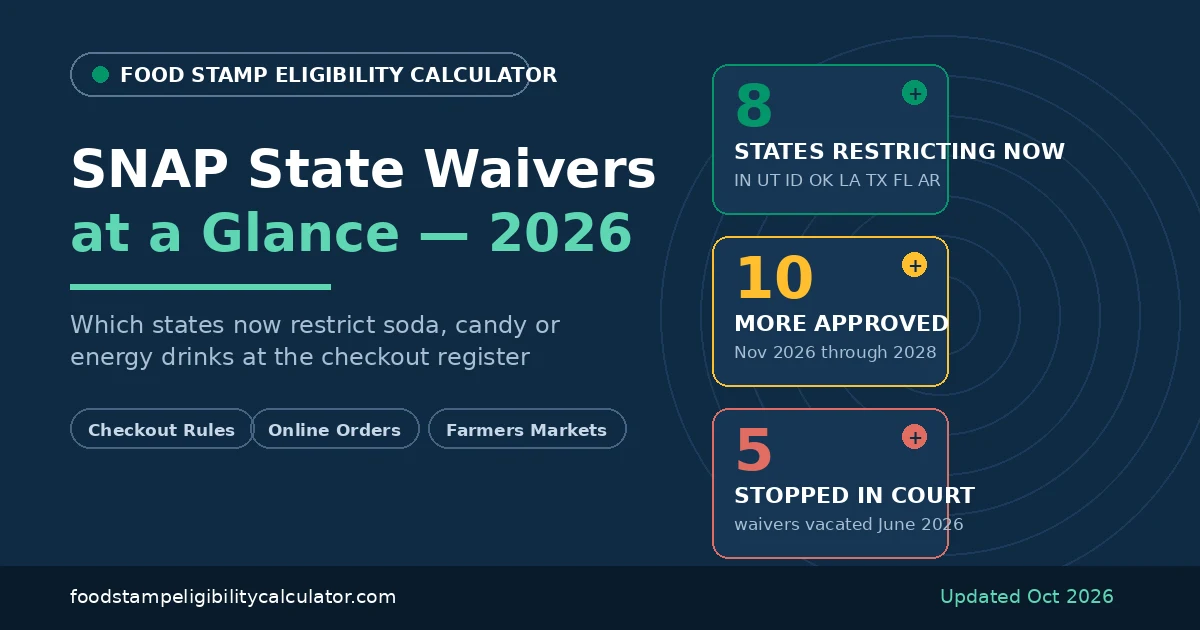
If your state is on the list, the register will simply decline the restricted items when you swipe your EBT card. Everything else in your cart still goes through as usual. Your state SNAP agency publishes the exact product list, so check it before a big shopping trip.
Soda, candy, and energy drinks remain fully eligible in the other 40-plus states because no nationwide ban exists. Benefit amounts work differently from purchase rules, and our SNAP benefits by state guide shows how allotments vary. The official SNAP Food Restriction Waivers page tracks every approval, effective date, and court challenge.
Prepared Foods: The Hot-and-Cold Line at the Deli
Grocery deli counters sell plenty of SNAP-eligible prepared food, as long as it is cold when you pay. Cold sandwiches, wrapped subs, sushi trays, potato salad, and deli platters all qualify. Cold rotisserie chickens stocked in the refrigerated case qualify too, and several chains stock them for exactly this reason.
Hot bar items, hot soups, and anything held under warming lamps fail the test at the register. Stores cannot reheat a cold item and then sell it to you with SNAP. If you want a hot meal at home, buy the cold version and warm it up in your own kitchen.
Bakery counters sit on the eligible side because cakes, breads, and pastries are sold cold. Ice cream cakes, cookie platters, and cheese trays all pass the same cold-food test. The only catch is the 50 percent decoration rule covered earlier for custom orders.
Online Shopping with SNAP Benefits
SNAP EBT works for online grocery orders through Amazon, Walmart, and Instacart in participating states. The USDA online purchasing program has expanded to cover most states, with new retailers added regularly. You select EBT as your payment method at checkout, and only eligible food items can be charged to the card.
Delivery fees, service charges, and tips cannot be paid with EBT, so keep a debit card handy. Walmart waives delivery fees on larger SNAP orders in select markets. Amazon's discounted Prime Access plan costs EBT cardholders just $6.99 per month.
When shopping online, the retailer's website marks SNAP-eligible items with an EBT label. You can mix eligible and ineligible items in one cart, then split the payment at checkout. Our step-by-step EBT online shopping guide walks through the full process store by store.
Double Your Benefits at Farmers Markets
Many farmers markets participate in the Double Up Food Bucks program, which matches every dollar you spend with EBT up to a daily limit. If you spend ten dollars of SNAP benefits on fresh produce, you receive a ten-dollar voucher to spend on more fruits and vegetables. The program operates in over 25 states and is funded by the USDA and private foundations.
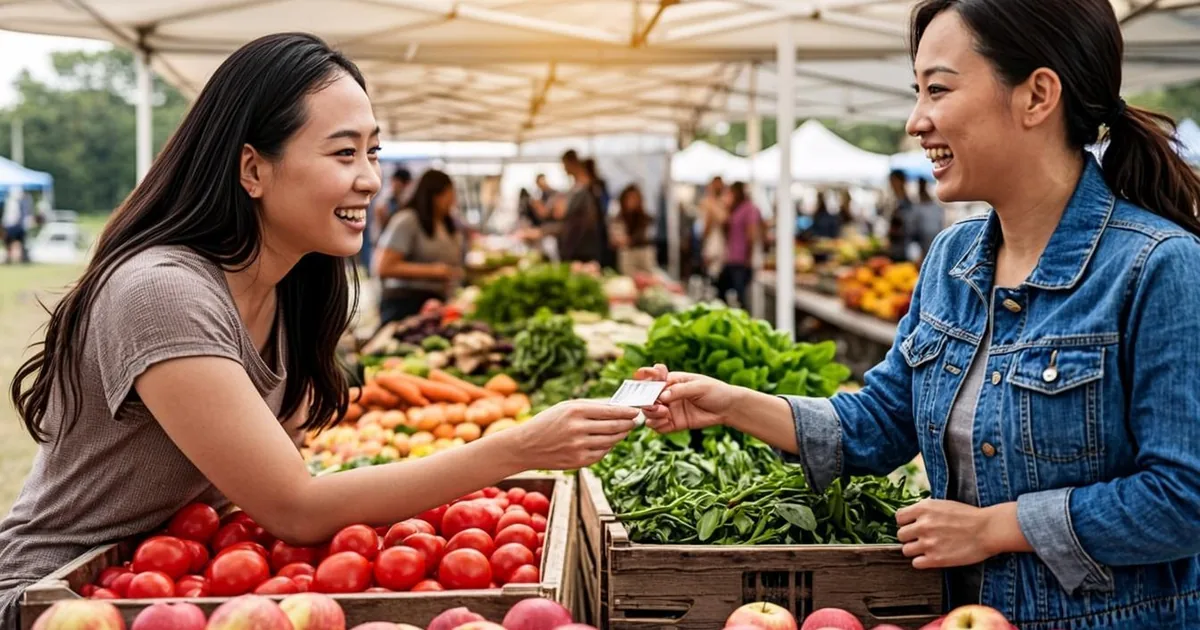
To use EBT at a farmers market, look for the information booth or the market manager's tent. They swipe your EBT card and give you tokens to spend at individual stalls. Some markets also add bonus vouchers for seniors through the Senior Farmers Market Nutrition Program, and our farmers market EBT guide explains the token system in detail.
SNAP at Wholesale Clubs
Costco, Sam's Club, and BJ's Wholesale all accept SNAP EBT for eligible food purchases. You need an active membership to shop at these stores, but the membership fee cannot be paid with EBT. Once inside, you can use your EBT card for bulk food items like rice, flour, frozen meats, and dairy products.
The savings on bulk staples can stretch your SNAP budget significantly. A twenty-pound bag of rice at Sam's Club costs about fifteen dollars, compared to four dollars for a five-pound bag at a regular grocery store. Our EBT at wholesale clubs guide compares the membership math for all three chains.
The Restaurant Meals Program
The Restaurant Meals Program is the one federal exception to the hot-food rule, and it only operates in a handful of states. Participating areas currently include Arizona, California, Maryland, Michigan, and Rhode Island, plus Cook County in Illinois and pilot zones in Virginia. New York and New Jersey passed their own laws but are still rolling out.
Only elderly, disabled, or homeless SNAP recipients qualify in most participating states, and your EBT card must be coded as RMP-eligible first. If you qualify, you can use your card at approved restaurants that display the EBT acceptance sign. Check your status with the state agency, and our restaurant meals program guide lists every participating chain by state.
A Print-and-Shop SNAP Grocery List
Here is a straightforward basket that covers a full week of meals for one or two people. Every item on this list passes the federal rules in all 50 states. Check your EBT balance before you shop so you know exactly what you are working with.
- ✓Produce: bananas, apples, carrots, potatoes, frozen broccoli, and a bagged salad mix
- ✓Protein: whole chicken, ground turkey, eggs, canned tuna, dry beans, and peanut butter
- ✓Grains: brown rice, oats, whole-wheat bread, pasta, tortillas, and breakfast cereal
- ✓Dairy: milk, shredded cheese, yogurt, and butter
- ✓Pantry: canned tomatoes, cooking oil, flour, sugar, and salt
- ✓Drinks: 100% juice, coffee, tea, and bottled water
- ✓Extras: popcorn, raisins, graham crackers, and vegetable seeds for a windowsill garden
A realistic trip looks like this: three dollars buys the rice and beans that anchor five dinners. Another six dollars covers eggs, oats, and peanut butter for breakfasts all week. That leaves the rest of your allotment for produce, proteins, and a couple of treats that keep the plan sustainable.
Tips for Maximizing Your SNAP Grocery Budget
Getting the most from your monthly SNAP allotment comes down to cost per serving. Rice, beans, lentils, oats, and frozen vegetables consistently rank as the most cost-effective staples. A one-pound bag of dry beans yields about seven cups for under two dollars, far cheaper than canned.
Buy whole chickens instead of pre-cut parts. A whole chicken costs about $1.49 per pound, while boneless skinless breasts run $3.99 or more. You can roast the chicken for dinner, use leftovers for sandwiches, and boil the bones for soup stock.
Frozen produce often costs less than fresh and has equivalent nutrition. A one-pound bag of frozen mixed vegetables costs about $1.25 and provides four servings. Our ways to stretch SNAP benefits guide covers more tactics, and the SNAP benefit calculator estimates your exact allotment.
Surprising Items SNAP Covers
Beyond the obvious grocery staples, SNAP covers several items that catch people by surprise. Knowing these can add variety to your meals without touching your cash budget. Each one traces back to a specific USDA rule worth understanding.
- ✓Lobsters and live shellfish — shellfish and fish removed from the water count as food under USDA rules
- ✓Pumpkins sold for cooking — edible varieties qualify, while decorative gourds do not
- ✓Bottled water, bagged ice, and water flavoring drops
- ✓Cooking wine and vanilla extract — salt stabilizes them, so USDA treats both as food
- ✓Energy drinks with a Nutrition Facts label, including Red Bull and Monster
- ✓Holiday turkeys and hams sold for home preparation
- ✓Custom bakery cakes that pass the 50 percent decoration rule
The energy drink aisle splits cleanly once you know the label trick. Red Bull, Monster, and Rockstar cans carry Nutrition Facts panels, so they are federally eligible foods. Shots like 5-hour Energy carry Supplement Facts panels instead, which places them on the excluded supplement list.
State waivers change this picture in several places. Louisiana, Florida, and Arkansas already block energy drinks at the register, and five more states join them on November 1, 2026.
Frequently Asked Questions
Can I buy soda with SNAP benefits?
Yes at the federal level, but not everywhere you shop. Eight states restricted soda or soft drinks under 2026 waivers, and five more states join them on November 1, 2026. In the remaining states, soda still rings up as an eligible food.
Can I buy birthday cake with SNAP?
Yes, as long as non-edible decorations stay under half the cake's total value. A frosted sheet cake qualifies easily. A cake with expensive figurines or plastic kits may fail the 50 percent test at the register.
Can I use SNAP at convenience stores?
Yes, many convenience stores like 7-Eleven, Circle K, and Dollar General are authorized SNAP retailers. You can buy milk, bread, canned goods, and snacks there. Expect a smaller selection and higher prices than at a full grocery store.
Can I buy hot food with SNAP?
No, hot prepared food fails the federal hot-food rule at the register. Cold deli sandwiches, sushi trays, and refrigerated rotisserie chickens are fine. The Restaurant Meals Program lets eligible elderly, disabled, and homeless recipients buy restaurant meals in a few states.
Can I buy seeds and plants with SNAP?
Yes, anything that grows food for your household qualifies, including tomato seedlings, pepper plants, and herb seeds. Fruit trees count too. The USDA added this rule to support home gardening and self-sufficiency.
Can I buy vitamins with SNAP?
No, vitamins, medicines, and supplements are excluded from SNAP. Check the panel: Nutrition Facts means food, while Supplement Facts means a supplement that EBT cannot cover. That single check works for protein powders, energy shots, and gummy vitamins alike.
Can I buy energy drinks with SNAP?
Federally yes, if the can has a Nutrition Facts label, which covers Red Bull, Monster, and most store brands. Shots with Supplement Facts labels are excluded. Louisiana, Florida, and Arkansas now block energy drinks under waivers, with more states joining in November 2026.
Can I buy drinks like Snapple, Gatorade, or iced coffee with SNAP?
Yes, bottled teas, sports drinks, and ready-to-drink coffees carry Nutrition Facts labels and qualify. They are treated like soda at the federal level. A few waiver states restrict sweetened bottled drinks, so the answer can differ in Texas, Indiana, or Florida.
Related SNAP Guides
If you found this shopping guide helpful, these related articles cover EBT card usage, online shopping, and benefit calculation:
- →EBT card guide — how to activate, use, and protect your benefits card
- →EBT at farmers markets — doubling your SNAP dollars with Double Up Food Bucks
- →Restaurants that accept EBT — the Restaurant Meals Program guide
- →SNAP benefit calculator 2026 — estimate your monthly allotment
- →What can you buy with EBT — the broader EBT shopping guide
Sources: USDA Food and Nutrition Administration (fna.usda.gov/snap/eligible-food-items), SNAP Food Restriction Waivers tracker, USDA SNAP Online Purchasing Program, Center on Budget and Policy Priorities SNAP research.